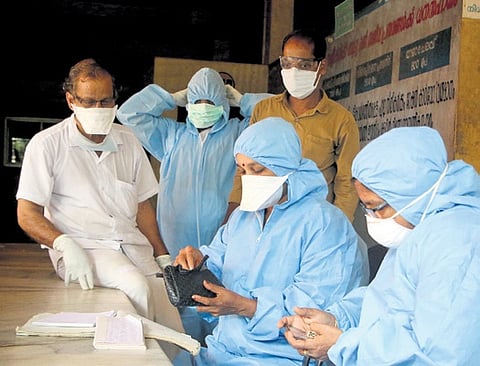

CHENNAI: With the increasing extreme climate events and zoonotic spillover, the state has decided to take ‘One Health’ approach and constituted a 23-member committee that will help manage the health crisis.
A G.O. constituting the ‘One Health and Climate Change Strategic Committee’ was issued by environment secretary P Senthilkumar, who will also act as the convenor for the committee. The group will be headed by chief secretary.
Top bureaucrats/ officials from health, agriculture, animal husbandry, wildlife, Tamil Nadu Pollution Control Board, Zoological Survey of India, Wildlife Institute of India, meteorological department will be members along with experts.
The ‘One Health’ concept is aimed at creating an integrated approach to health that recognises the interconnection between human, animal and environmental health.
Senthilkumar said the committee will look to promote a comprehensive and integrated response to the public health challenges posed by climate change, leveraging the ‘One Health’ approach to foster collaboration across various sectors and disciplines and advocating for policies that protect the health of people, animals and the environment.
The committee’s mandate included mapping of existing surveillance programmes, including all ongoing disease surveillance programmes across the sectors and having access to information on climate mediated diseases and disease trigger mechanisms to develop preventive actions and control. It also aims to develop complete surveillance systems for early detection of disease outbreaks across species, as per the G.O.
The efforts are aimed at making the state more climate-resilient and reducing its vulnerability to the adverse effects of climate change. During the first meeting of TN Governing Council on Climate Change, Chief Minister MK Stalin directed the ministers to examine and implement projects through the climate change lens, and also pointed out the need for ‘One Health’ approach.
Supriya Sahu, additional chief secretary to the government said this is a very futuristic move. “Currently, the surveillance data generated from different departments like animal husbandry, epidemiological data from health, forest etc are not looked at holistically. For instance, everyone assumes the rise in dengue cases is because of unseasonal rains, but there is more to it. Lots of interactions happen between human, animals within an ecosystem. This must be understood to intervene appropriately. The Nipah virus is another example,” she said.
What’s zoonotic
Zoonotic, or zoonosis, is an infectious disease that spreads between animals and humans. The diseases can be caused by viruses, bacteria, parasites, or fungi, and can range from mild to severe and life threatening. Some examples of zoonotic diseases include rabies, canicola fever, and Weil’s disease.
