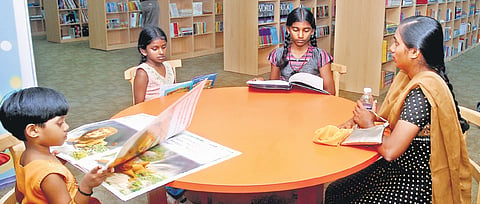

CHENNAI: Books in public libraries near you should be updated every three months and readers will have a say in what books are purchased, according to the the Transparent Book Procurement Policy released by the state government on Thursday.
The policy envisages setting up of an online portal to allow inputs from stakeholders to recommend books. The committee to frame the policy was set up in 2021.
The directorate of public libraries has not procured books for the past three years stating that the procurement policy needs reform to avoid various illegal practices employed by sellers and publishers.
According to the policy, an exclusive portal will be designed for the procurement of books for public libraries and the director of public libraries will form an expert committee and sub-committees for book selection, and applications for selection of books can be submitted throughout the year. The director will form a committee of select critics, readers, educators and scholars. The books will be reviewed by more than one expert in the committee and they will follow a point-based scoring system to ensure objective selection.
To make libraries reader-centric, select librarians and readers’ circles will also evaluate the books with representatives from all types of libraries and a website will also be created for readers to rate the books. A list of selected books will be created based on aggregate rating. Once the list is out, the reader’s circles, competitive examination students and librarians should jointly select the books required for their respective libraries through the website every quarter - June 30, September 30, December 31 and March 31.
According to the rules, 25% of library tax income should be used to buy books, periodicals, newspapers, etc. The directorate of public libraries will also conduct a book utilisation survey every year and determine the percentage of funds to be spent for each genre of books like fiction, non-fiction, competitive examination, children’s books, academic, documentary, and government publications, translated works and foreign books.
Noting that the books are sent to the district central libraries to provide them with a central accession number before sending them to local libraries, the policy also states that this process can be done online and books can be sent directly.
The director will also form a committee to calculate the maximum and minimum book price index for each genre by compiling the book prices of various publishers considering their quality as well every January. Based on this, the directorate will hold negotiations with publishers online. To avoid delay in paying sellers, the policy suggests the funds should be transferred to a separate escrow account and kept ready.
Talking about new rules, G Olivannan of Emerald Publishers, described it as a revolutionary move. “We have been fighting for transparency in the process for a long time. Earlier, only people with influence would be able to sell their books even if they were not up to the standards. This will improve the quality of books in the libraries and bring more readers,” he said.
