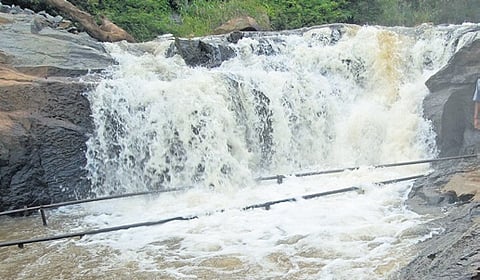

CHENNAI: Tamil Nadu Green Energy Corporation (TNGEC) resumed technical work on the Rs 307.19-crore 20-MW hydropower plant in Kolli Hills in Namakkal district during the first week of September after receiving turbines from China.
The project is now expected to be commissioned by 2025. Initiated in 2016, the project got delayed primarily due to the Covid-19 pandemic and subsequently over delay in acquiring raw materials. However, experts have raised concerns over the project’s long-term viability considering the lack of water availability.
An official from the TNGEC said the construction of weirs has ended and work on the powerhouse, power tunnel, penstock installation, and switchyard is under way. “So far, the physical progress of the project is at 69% and the financial progress stands at 66%.
We are also planning to establish a substation in Puliancholai in Tiruchy district,” the official said. “Kolli Hills has around 50 small villages. The aim is to provide electricity to these areas and promote green energy,” the official added.
Doubtful of the project’s feasibility, S Nagalsamy, a former member of the Tamil Nadu Electricity Regulatory Commission, raised concerns about water availability. He said, “In 2003, we inspected the site for the project and advised against it. Kolli Hills receives rain only during the southwest monsoon — from June to August.
There are no perennial rivers or reservoirs, and the only flow is through small canals.” Questioning the decision to move forward, Nagalsamy asked, “Given the lack of major water sources, why is the electricity board and the state government investing so much in this project?”
Several engineers within the power utility have also voiced against the project. “The money and time spent on this project is a waste,” they said, expressing concerns about its cost and long-term viability.
Despite these concerns, the TNGEC remains committed to completing the project.
