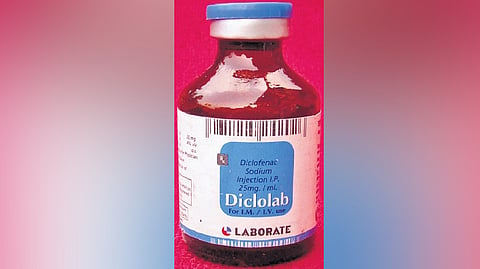

COIMBATORE: Setting off the alarm bells, a study found that the rapid decline in population of three species of Gyps vulture — White rumped vulture, Red headed vulture and Long billed vulture — that are endemic to Asia were caused by unintentional poisoning by the non-steroidal anti-inflammatory drug (NSAID) diclofenac, banned by union government two decades ago. Though the vetenary use of the drug was banned in 2006, it continues to be used to treat sick cattle across the country.
The study ‘The continued threat of toxic NSAIDs to Critically Endangered Gyps vultures in South Asia’ by a group of 13 researchers across South Asia, carried out between 2012 and 2024, was published in Bird Conservation International journal recently.
Though the availability of diclofenac has declined over the years in all Vulture Safe Zones (VSZs), it is still readily available (up to 25% of sales) in Rajasthan where intensive conservation advocacy had not occurred.
S Bharathidasan, secretary of Arulagam which carried out the survey across VSZ in Tamil Nadu, more than 100 court cases have been filed against suppliers, distributors, manufacturers, and retailers of diclofenac. “Significantly, the only vials of diclofenac that were found in Tamil Nadu VSZ were manufactured at pharmacies in neighbouring Karnataka, which is outside the VSZ, where conservation advocacy has been less intensive.” The report pointed out that vulture-safe meloxicam continues to be the most commonly available veterinary NSAID.
“The number of pharmacies in which an NSAID was offered varied between regions — 64.3% (TN) to 100% (Rajasthan). Most of the diclofenac supplied was in the form of 3-ml vials, which are legal to stock for human use, but illegal for veterinary use,” it said. The centre had banned the veterinary use of diclofenac in May 2006 (with further restrictions on multi-dose human vials in 2015). It also banned the manufacture, sale, and distribution of veterinary drug formulations containing ketoprofen and aceclofenac in July 2023.
Tamil Nadu has taken steps to protect vultures, including restricting the use of the toxic drug ‘Flunixin’ for veterinary use in key vulture habitats (such as The Nilgiris, Erode, and Coimbatore districts, starting around 2019). The state had also curbed the use of ketoprofen as early as 2015 before the national ban.
Bharatidasan said even though the government removed one toxic drug from the system, another un-tested drug has been introduced or used as a substitute, continuing to threaten the vultures. “The government and other crucial stakeholders should take steps to stop the pilferage of banned human-use vials for veterinary purposes, and to prevent the introduction of new toxic substitutes,” he added.
