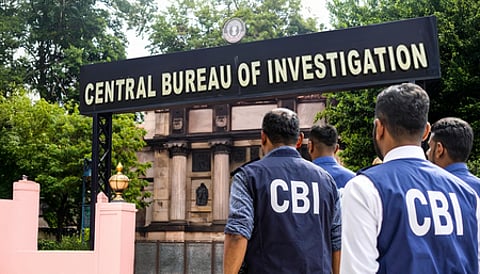

CHENNAI: Two years after the Tamil Nadu government withdrew its general consent to the Central Bureau of Investigation (CBI), the number of cases registered by the agency in the state has reduced by more than half, as per official data.
General consent refers to the broad authorisation given by a state government to the CBI to probe cases within its territory without requiring specific permission for each case.
According to the data, CBI’s four investigative units in TN, some with additional jurisdiction over Puducherry, had registered more than 50 cases every year since 2020-21. The 58 cases registered in 2022-23 were the highest since 2017-2018 when the agency started uploading all its FIRs on its website.
The number, however, drastically reduced to just 23 in 2023-24 coinciding with the withdrawal of the general consent by TN in June 2023. The number went up to 31 in 2024-25.
While CBI did not respond to an official email seeking response for the drop in numbers, a senior state official said that TN has not denied consent to CBI even for a single case, at least in the past year.
Once a state government withdraws its general consent, CBI can register cases only after obtaining consent from the state on a case-by-case basis or if directions are issued by high courts or the Supreme Court to the agency to probe a case.

10 of 54 cases pertain to offences from other states
Earlier this year, a division bench of the SC ruled that the CBI does not require the sanction of state governments to register cases against central government employees working within the territory of a concerned state.
Of the 54 cases registered over the past two years by the four TN units of the CBI, at least 10 pertained to offences recorded in other states such as AP and Maharashtra. This suggests that CBI officers posted in TN are increasingly being deployed to investigate cases outside the state.
An analysis of the 54 FIRs revealed that 30 were registered following directions from either the Madras High Court or the Supreme Court. Nine were filed after obtaining the Tamil Nadu government’s consent, and one case was transferred to the CBI by the state itself.
The remaining cases pertained to the Union Territory of Puducherry, where no consent is required. In one instance, consent was obtained from the Kerala government, as the complaint originated from the State Bank of India’s Trivandrum branch.’
The custodial death case of B Ajithkumar, a temple security guard in Sivaganga district, along with a related theft case, has been handed over to the CBI. This brings the number of cases voluntarily transferred by the TN government to three since the withdrawal of general consent.
Sources in the centre allege that the DMK-led government’s decision is politically motivated, intended to prevent interference by the BJP-led centre. They also claim the move is aimed at restraining the ED, as CBI cases can be used as predicate offences to initiate money laundering investigations under the Prevention of Money Laundering Act.