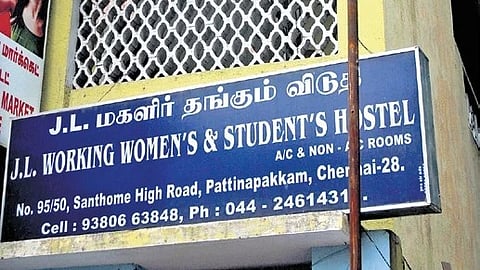

CHENNAI: Holding that hostels used for dwelling purposes by working professionals and students fall under the definition of residential premises, the Madras High Court said commercial tariff on utilities or property tax cannot be collected from such hostels.
The court also quashed the tax demand notices issued to certain hostels in Chennai and Coimbatore asking them to pay commercial tariff.
Justice Krishnan Ramasamy passed the orders recently on the petitions filed by the hostel managements challenging the demand notices.
Citing various court orders, the judge said the high court has already laid down the law that hostel rooms, used by working men and women, or students as sleeping apartment after their avocation, has to be considered as a “residential unit” and the same yardstick will squarely apply in the present case too.
He recalled his own order passed in favour of treating hostels as residential units when they challenged GST notices. In that order, he had held that the hostel rooms were used by the inmates as a “sleeping apartment” and the same would fall under the category of residential premises.
Referring to the present petitions, he ruled, “The nature of activities carried on by the petitioner is only residential in nature and accordingly, residential tariff will apply for the purpose of levying property tax, water tax and water charges for the petitioners’ properties.”
He added, it is needless to state that if the property tax as well as the water tax are required to be collected in the residential tariff and ultimately, the electricity charges are also required to be collected only in the residential tariff.
Concurring with the submissions of petitioners’ counsel Aparna Nandakumar that there is a clear violation of principles of natural justice as no notice was issued to the petitioners prior to sending demand notice for commercial tariff, the judge quashed the impugned notices.
He also stated that a different yardstick cannot be adopted for hostels and apartments where residential tariff is collected for renting out houses for residential purposes.
“If the contention of the respondents is accepted and different yardsticks are applied, then it would be a clear discrimination against the poor people,” the judge said.
