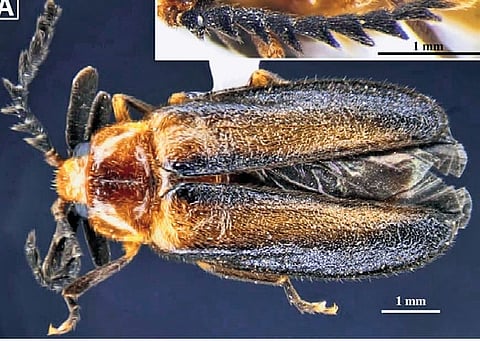

NILGIRIS: A team of six researchers have discovered two new non-luminous firefly species - Lamellipalpodes debprasuna and Lamellipalpodes kurumba - at Coonoor in the district. One of the species is named in honour of Kurumba, a primitive tribal community living in the Nilgiris.
Researchers A Chakrovorty, N Moinudheen, B Bhattacharjee, Anbazhagan Abinesh, Arokianathan Samson, and N Sadiq Ali carried out the study in Coonoor last year, and it was published in the International Journal of Tropical Insect Science on October 8. Lamellipalpodes is a genus of non-luminous fireflies, and they are known for their uniquely broad terminal labial and maxillary palpomeres.
“As part of the broader goal of indexing the rich biodiversity of Nilgiris, these findings emphasise the importance of safeguarding the immense and unique biodiversity of the remarkable landscape.

Lamellipapodes kurumba, which was discovered in the land of the Kurumbas, are in danger of extinction, and through this small dedication, we hope to bring attention to their heritage,” Chakrovorty said.
“The ecological contributions of these two species are very important. However, areas adjacent to the Nilgiris wetlands are being destroyed due to anthropogenic pressure, with soil fertility being the biggest threat. Moreover, excessive pesticide and fertiliser usage in farmlands is also destroying insects.
Though studies done about these species are few, they are an indicator of rich biodiversity,” Moinudheen said. Sadiq Ali and his team, who are working closely with the Kurumba community, said the discovery is a step forward in both biodiversity conservation and cultural recognition of the Nilgiris.