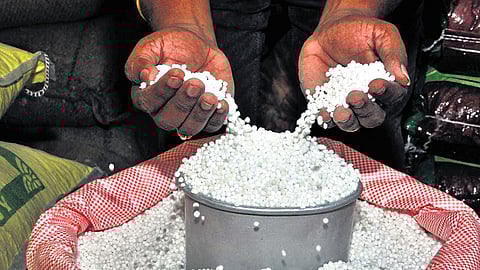

SALEM: A steep decline in demand for tapioca pearls or sago has left large quantities of the product stagnating at sago mills in Salem. A festive staple, especially during the nine-day Navratri period, data from Sagoserve (Salem Starch and Sago Manufacturers’ Service Industrial Co-operative Society Ltd) show that sales have dropped by 21.31% as compared to last year, leaving nearly one lakh bags of sago, each weighing 90 kg, unsold.
Prices have also fallen sharply, from `50 per kg last season to `37 per kg, a nearly 25% decline. During previous Navratri seasons, around 15,000 bags would leave Salem daily for northern states, but this year’s despatches have reduced to around 7,000 bags.Sago, made from tapioca, is preferred during fasting periods as it is light, filling and easy to digest. Usually, there is a strong demand for sago, also known as sabudana in Hindi, from Maharashtra, Madhya Pradesh, Uttar Pradesh and Gujarat.
However, a slump in festive demand this year has sharply affected sales. A Salem mill owner, on condition of anonymity, described the situation as “a severe crisis”. He blamed the fall on irregular marketing and unregulated trade. “Though Sagoserve requires that all sales go through its system, many mill owners sell directly to traders in the north. By bypassing the testing process, they earn around `300 more per 90 kg bag,” he said.
“Such unregulated trade has started to undermine consumer trust. When sago is sold without proper testing, buyers doubt its purity. Farmers and mill owners are now struggling to recover even the production costs,” he said.
Sagoserve MD R Keerthy Priyadarshini said, “As per Sagoserve’s bylaws, manufacturers must sell only through the cooperative. However, manufacturers avoid the SagoServe system to bypass quality testing and evade GST. Every batch sold through us undergoes laboratory testing. If a sample fails, it is referred to the food safety department. To escape this, some producers sell outside,” she said. Although a district-level monitoring committee, headed by the collector, exists to oversee trade, industry insiders say the committee is largely inactive.