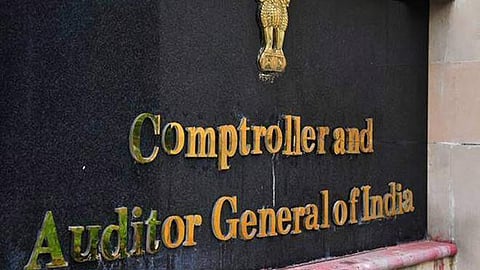

CHENNAI: The Comptroller and Auditor General(CAG) report, submitted in the Assembly on Friday, has stated that the Gender Budget Statement (GBS), Scheduled Castes Sub Plan (SCSP), and Tribal Sub Plan (TSP) for 2023-24 were not prepared in the format prescribed by the centre.
The report noted that all three documents lacked actual figures for 2021-22, and the budget estimate and revised estimate for 2022-23 were not shown.
Consequently, the probable outlay and actual expenditure on women-oriented schemes could not be analysed. The CAG noted this issue had been raised in an earlier report. While the state adopted the prescribed format for the GBS for 2024-25, it did not indicate whether similar changes were made for the SCSP and TSP.
Activists said disclosing actual expenditure is essential to assess government performance.
In GBS Part A (100% allocation for women), the Social Welfare and Nutrition sector received the highest share at Rs 14,568.01 crore, including Rs 7,000 crore for the Magalir Urimai Thogai scheme.
In Part B (40-99% benefit for women), the Education, Sports, and Culture sector was allocated Rs 8,850.76 crore, with the top-funded scheme being PDS support under social security component at Rs 8,190 crore. Out of 140 schemes under Part A, 17 received only token allocations. Notably, the Special Nutrition for Children and Lactating Mothers scheme had no expenditure for nine years and 12 other schemes saw provisions repeatedly withdrawn over three to seven years.
The CAG report pointed to weaknesses in planning and execution of women-oriented schemes.
The government had announced the Magalir Urimai Thogai scheme with a total outlay of Rs 7,000 crore with Rs 5,460 crore under the General Component Plan and Rs 1,540 crore under the Scheduled Caste Component Plan.
However, the Tribal allocation was initially omitted under the TSP and only released in the February 2024 supplementary estimate, delaying grants to tribal beneficiaries.
The report further noted that the SCSP and TSP for 2023-24 show gaps in compliance, allocation, and implementation, highlighting the need for better adherence to formats, adequate budgeting, and effective execution to advance social equity.
Police, fire depts spent less than allocation
Chennai: As per the 2023-24 CAG report, the TN Police (Home, Prohibition and Excise Department) received `10,938.93 crore but spent `10,702.47 crore, leaving savings of `236.45 crore. The department has shown consistent savings over five years, indicating underutilisation of capital resources.
The DGP office and Chennai commissioner’s office also spent less than their allocation. District police commissioners and operations exceeded original provisions. Revenue expenditure rose from `9,609.47 crore to `10,299.93 crore, with `210.48 crore surrendered at the end of March 2024.
Delays of 12-36 days occurred in fund transfers under enforcement schemes, and several heads saw 100% March spending, hinting at poor financial planning. The Fire and Rescue Services department spent only `27.41 crore of its `80 crore capital provision.
Quick look
The gender budget outlay for 2023-24 increased by 11.71% compared to 2022-23.
The share of the gender budget in the total budget estimate has ranged between 38.32% in 2021-22 and 40.82% in 2023-24.
In six schemes under Part A, actual utilisation was less than 50% of the budget outlay.
Out of 316 schemes under Part B, 60 schemes received no provisions and 15 schemes received only token provisions.
The Handloom and Textiles sector, where women constitute 52% of the workforce, received no allocation under the GBS.
Allocation for the Agriculture and Allied Activities sector under Part A has fallen sharply, from 7.03% in 2019-20 to 0.41% in 2023-24.
Utilisation of the Menstrual Hygiene Programme declined to 26.92% in 2023-24, down from 69.26% in 2022-23.
