
TIRUCHY: With Deepavali around the corner, doctors at the Mahatma Gandhi Memorial Government Hospital (MGMGH) urge the public, particularly children, to take precautions against cracker-related eye injuries.
According to sources in the ophthalmology department, six out of every ten cracker injuries reported each Deepavali involve the eyes. Over 15 such cases were treated in 2024 alone, with many of them arriving late by as much as a week, said doctors, stressing the need for medical attention without delay.
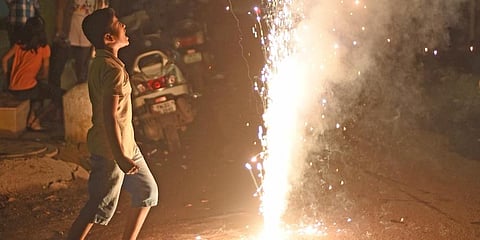
Doctors pointed to three major causes behind cracker-related eye injuries. The first stems from high-sound crackers, which generate intense shock waves that propel fine dust and tiny stone particles into the eyes. The second involves high-flame fireworks such as paambu mathappu, pencil, chakra and flower pot, whose sparks can instantly burn or injure the cornea when ignited at close range. The third is the practice of burning leftover crackers together at the end of the celebration, often causing sudden flares or mini-explosions that injure children and other onlookers.
"Most of the injuries we treat are avoidable," said Dr Parthiban Purushothaman, Head of Ophthalmology at KAP Viswanatham Government Medical College-MGMGH. "They are not caused by direct blasts but by tiny particles entering the eye. Parents should ensure that children light crackers in open areas and maintain a safe distance," he added.
For temporary relief, doctors suggested that a mild antibiotic ointment such as Aplicaps be applied after rinsing the eyes thoroughly with running water. They, however, stressed that it should never replace professional medical treatment.
"Delay in seeking care can lead to serious damage as many come three days to a week later without knowing the seriousness," said an ophthalmologist.
Doctors also warned against common home remedies such as applying castor oil or over-the-counter drops directly to the eyes. "These methods often delay treatment and increase the risk of infection or corneal damage," the ophthalmologist added.
Meanwhile, hospital officials in a release on Saturday said the MGMGH is fully equipped to handle Deepavali emergencies. The 17-bed Burns Ward, with separate sections for men and women, is air-conditioned and supported by a ventilator and a dedicated operation theatre.
