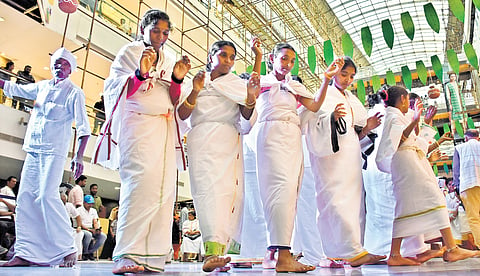

CHENNAI: Soon, you will be able to explore the rich art forms and traditions of Adi Dravidar and Tribal communities from your home, as the Adi Dravidar and Tribal Welfare Department has launched a Rs 70-lakh project for creating a digital repository documenting and preserving the music, dance, costumes, paintings, and other cultural expressions of these communities in the state.
In addition to safeguarding these artforms and making them accessible to the public, the project will also serve as a resource for researchers.
Despite their rich heritage, many Adi Dravidar and Tribal artforms have been historically marginalised, under-documented, or misrepresented in mainstream narratives. Today, they face increasing threats of decline due to rapid socio-economic changes and lack of institutional support.
With an aim to address this concern, the Tribal Research Centre will implement the project, digitally documenting, curating, and making accessible the diverse traditions of Adi Dravidar and Tribal communities in the state.
The initiative, anchored in inclusivity and community representation, will promote cultural literacy and support efforts towards achieving the Sustainable Development Goals (SDGs) related to cultural diversity, social cohesion, and sustainable heritage management.
According to officials, the department already has an initial collection of over 1,000 photographs of musical instruments and performance artefacts, along with video recordings of over 50 marginalised performance traditions created during the Aadi Kalaikol Festival 2024.
As part of the project, these materials will be curated into a digital archive for long-term preservation in line with archival standards, alongside the identification and documentation of other art forms. Community members will also play an active role in ensuring participatory and representative documentation.
The repository will go beyond simple digitisation by including 3D scans of traditional musical instruments, enabling web visualisation and long-term archival storage. Each artform will be documented with detailed notes on its history, significance and context, along with videos of performances.
The curated content will be stored in a digital repository hosted on a cloud platform, with layered access controls to manage different user roles such as public, researcher and administrator. Materials will be assessed for their cultural value, technical quality, and relevance to the identified traditions, officials said.
“The first phase of the project will build on the materials already collected by the department to ensure comprehensive coverage of at least 50 artforms, which we aim to digitise within eight months. After that, we will move on to other traditions and cover all of them gradually. This documentation will be an evolving process,” said an official from the Adi Dravidar Welfare Department.
