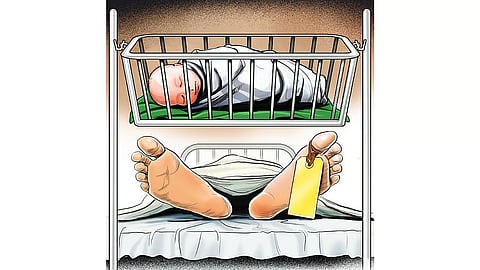

COIMBATORE: Experts in the consultative meeting held on Saturday at Tamil Nadu Agricultural University in Coimbatore said that despite measures, there is a lack in prevention of maternal mortalities, and the health system needs to be strengthened accordingly to reduce the MMR. The meeting was held as part of the state government's initiative of 'Unga Kanava Sollunga - En Oor En Kanavu'.
The state's MMR rate is 39.2, while that of the Coimbatore district is 34.2, they added.
The Deputy Director of Health Services, Dr P Balusamy, said that this meeting facilitates the discussions on need of the health sector for its development.
"As the collector stated, the maternal mortality rate is a major concern in Coimbatore. We have to give better care for it in tertiary care. On average, around 4000 mothers are registered every year, and a similar number of mothers give birth every year.
We are handling around 40,000 antenatal mothers every year in Coimbatore. Hence, we have to focus on their care and have to discuss where we are lacking. In the elderly age category, cancer is a major issue in Coimbatore. Through this consultative meeting, we discuss the challenges and aim to find remedies which will be sent to the Chief Minister through the district administration," he stressed.
According to the CMCH Dean, Dr M Geethanjali, the state's Infant Mortality rate is 7.7 (per 1000 live births) while Coimbatore's rate is 5.5. However, the Maternal Mortality Ratio in Coimbatore is high (34.2 per lakh live births), when compared to the state's ratio (39.2).
"Exclusive breastfeeding is a must for the first six months of life, and then complementary feeding is what is needed. In between 6 and 36 months of life, anganwadi centres play significant role.
In Coimbatore, 148319 children are being targeted for screening under the Rashtriya Bal Swasthya Karyakram (RBSK) - a comprehensive government programme that screens children from birth to 18 years for defects at birth, diseases, deficiencies, and developmental delays. 98% of them were screened, and medical support is being offered immediately. She added that the non-communicable diseases are the upcoming epidemic caused by lifestyle and food practices.
Experts from different sections in health care offered suggestions to improve the sectors like reducing cancer burden, antenatal care, neurodevelopmental disorders for children, patient care, health infrastructure, and so on, in the meeting.
