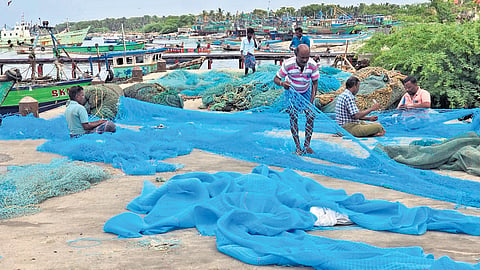

RAMANATHAPURAM: Mechanised boat owners in Rameswaram are in the throes of a deepening crisis, with the number of active boats dropping from over 700 before the Covid-19 pandemic to below 350 in 2026 amid mounting maintenance costs, recurring arrests and boat seizures by the Sri Lankan Navy, dwindling fish catch and rising fuel prices, fishermen leaders said.
According to representatives of mechanised boat associations, the decline has unfolded steadily over the past five years as mounting operational costs and recurring cross-border issues pushed many owners out of the sector.
The concerns come at a time when the annual fishing ban period, enforced from April 15 to June 15 along the east coast to facilitate marine breeding, is under way. During the ban, mechanised boat owners typically undertake large-scale maintenance works on their vessels ahead of the next fishing season.
P Jesuraj, president of the All-Mechanised Boat Fishermen Association, said the cost of maintaining boats has increased sharply this year owing to the steep rise in prices of raw materials such as fibre, wood and other equipment. “Compared to last year, maintenance expenses have increased by nearly one-third.
Even minor works such as painting and barnacle cleaning cost anywhere between Rs 50,000 and Rs 1 lakh. Major repair works cost between Rs 3 lakh and Rs 8 lakh depending on the size of the boat and nature of repairs,” he said.
Jesuraj added that several fishermen were abandoning the profession due to mounting financial burdens and recurring issues in the Palk Bay region. “Low fish catch, Sri Lankan issues and increasing operational costs have severely affected boat owners. Over the years, hundreds of boats have been confiscated by the Sri Lankan Navy.” An RTI reply obtained by TNIE revealed that around 201 boats were seized for alleged IMBL violations during 2021-25.
Boat owners are also facing labour shortages during the maintenance season. M Patrick, a mechanised boat owner from Pamban, said finding skilled workers has become increasingly difficult. “We are paying around Rs 1,500 to Rs 2,000 per day for each worker engaged in repair works. Engine maintenance requires diesel, and fuel prices have also gone up sharply. The overall expenditure is becoming unbearable,” he said.
Another fishermen association leader, S Emarald, said most boat owners prefer to complete repair works during the ban period itself so that vessels are ready immediately when fishing resumes. Fishermen leaders also urged the government to address issues concerning fuel price hikes and cross-border fishing disputes, stating that escalating costs continue to threaten the livelihood of mechanised fishermen in the region.
