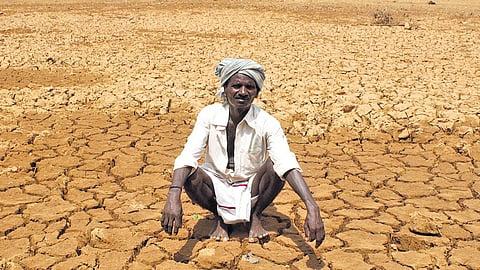

CHENNAI: Groundwater levels declined across all districts of Tamil Nadu in September this year, with none recording an improvement compared with the corresponding month last year, amid El Nino conditions. The state is facing its worst groundwater situation in 16 years, with the latest data pointing to a widespread decline across the state.
The decline has raised concerns over groundwater availability as the state heads into the northeast monsoon with a lot of hope following a deficient southwest monsoon.
The situation marks a sharp deterioration from 2017, when Thanjavur was the only district to record a rise in groundwater levels, by 1.12 metres, while all other districts reported a decline. In September this year, however, not even one of the 38 districts recorded an improvement, highlighting the severity of the groundwater crisis.
According to Water Resources Department (WRD) data accessed by TNIE, Tiruvannamalai recorded the steepest decline, with groundwater going deeper from 3.68 metres below ground level in September 2025 to 7.56 metres in September 2026, a fall of 3.88 metres in the water table.
Coimbatore recorded the next-steepest decline, with groundwater depth dropping from 10.28 metres in September 2025 to 13.73 metres in September 2026, a drop of 3.45 metres. Tiruppur recorded the third-steepest decline, with groundwater depth falling from 9.01 metres to 11.62 metres during the same period, a fall of 2.61 metres.

A senior official told TNIE, “The western districts face considerable pressure on groundwater resources because of industrial, agricultural and domestic requirements. Coimbatore, in particular, has a substantial industrial base, including textile and automobile-related industries, which adds to water demand.”
The official said the extent to which industrial groundwater extraction had contributed to the latest decline needed to be assessed. The situation has been compounded by inadequate rainfall and prevailing El Nino conditions, raising concerns over water availability. Poor rainfall limits aquifer recharge, while prolonged dry weather can intensify water stress, the official added.
“The southwest monsoon failed to provide adequate rainfall to Tamil Nadu this year. As a result, storage in major reservoirs and other water bodies has remained low. This has also contributed to the decline in groundwater levels,” said another official and added that Tamil Nadu is now depending on the northeast monsoon to replenish reservoirs, lakes and groundwater sources.
The official also pointed to a worsening trend in several districts. Between September 2022 and September 2026, groundwater depth went down by 6.09 metres in Coimbatore, 5.4 metres in Erode and 4.95 metres in Kallakurichi.
The figures underline the need to strengthen rainwater harvesting and protect local water bodies to improve groundwater recharge, particularly in industrial and urban areas, he added.