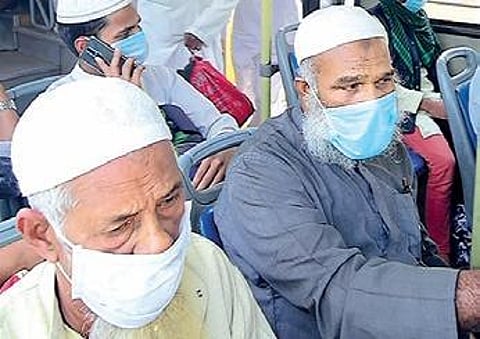

HYDERABAD: Much is being discussed about the Tablighi Jamaat after the death of six individuals associated with the sect.
But what exactly is it? Tablighi Jamaat, or Brotherhood of Preachers, is a fast-growing missionary Islamic movement, which was started in 1926 in Mewat province by Islamic scholar Maulana Muhammad Ilyas.Even though members of the jamaat are hard to reach, several research publications have thrown some light on it.
A study, Hindu and Islamic Translational Religious Movements by Shail Mayaram says that the Tablighi was formed as a counter to the Shuddhi movement of the Arya Samaj, whose aim was to bring back people who had converted to Islam and Christianity.
Ilyas, the Tablighi founder, launched the movement among the Meos from Mewar region. Mayaram says that Ilyas targeted ‘half-Muslims’ or ‘borderline Muslims’ who were being reclaimed by Shuddhi. It was under his son and successor M Muhammed Yusuf’s leadership that the Tablighi Jamaat spread to Asia, western countries, China and Centra Asia.
A publication by the United States Institutes of Peace, a federal US institution, says the organisation has “full-time” Tablighis who comprise the shura (council). Apart from that, there are ‘travelling Tablighs’ (for instance the Indonesians in Karimnagar), who undertake ‘proselytysing missions’ over varying durations. Members of the jamaat can often be seen with beddings across shoulders at railway stations on roads, as they go door-to-door in villages and address gatherings at mosques. Travel holds a special significance and is compared with Prophet Mohammed’s migration from Mecca to Madina.
“Tablighis in India, Pakistan, and Bangladesh have competing claims as to which comprises the movement’s international headquarters. Those in India contend that Nizamuddin in Old Delhi is the base, since the movement grew out of the Deoband school of Islam and it is in Delhi that the group was founded,” said the study Islamist Networks: The Case of Tablighi Jamaat by Nicholas Howenstein.This is why around 1,000 from the State travelled to Banglawale Masjid in the Nizamuddin area in Delhi.
The messengers
A publication by the United States Institutes of Peace says the organisation has “full-time” Tablighis who comprise the shura (council). Addiotinally, there are also “travelling Tablighis” who undertake proselytysing missions.