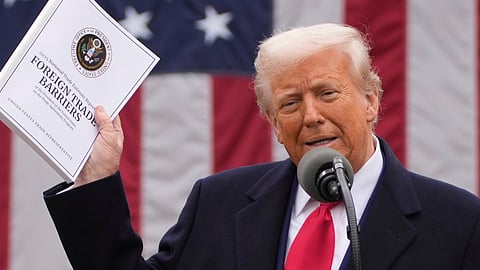

HYDERABAD: The decision by US President Donald Trump to impose a 25% tariff on Indian exports has triggered concerns across several sectors, including Telangana’s thriving information technology industry.
While the tariffs are primarily targeted at physical goods, experts believe there could be indirect consequences for the software services sector as well.
Telangana, home to one of India’s most robust IT ecosystems, reported software exports worth over USD 32 billion in 2024. According to Telangana IT Advisor Sai Krishna, the newly announced tariffs are unlikely to directly affect software goods or services. However, he warned of a possible cascading impact, particularly on business mobility and IT budgets among American firms.
Potential impact on business mobility and service delivery
One of the key concerns is the potential tightening of US visa and business travel norms. “With increased tariffs, scrutiny on trade and business interactions could rise, leading to potential delays or restrictions on professionals traveling to the US under business or trade visas,” Sai Krishna noted. This could slow down project execution, especially for companies relying on on-site teams for client delivery and support.
To mitigate these challenges, Telangana-based IT companies are reportedly exploring hybrid delivery models, he said. These involve a mix of remote (offshore) and on-site (client location) teams to ensure service continuity. “In such models, critical components of the project are handled remotely from India, while a smaller team manages client coordination in the US, thus reducing dependency on cross-border mobility,” Sai Krishan added.
Budget cuts in US firms could affect demand
Another area of concern is the possible contraction in IT spending by US corporations. The increased cost of importing physical goods may compel companies to rebalance their budgets, potentially reducing investments in digital transformation and IT services. As a result, software exports from Telangana could see a dip in demand in the short to medium term.
“IT services exports refer to the delivery of software development, maintenance, testing, consulting, and digital transformation services to clients abroad. Most of these services are project-based and client-specific, often requiring close collaboration,” explained the IT official.
Exploring new export markets in other countries
Despite these emerging challenges, Telangana officials remain optimistic about the long-term trajectory of the state’s IT sector. “The current tariffs are likely to be a short-term disruption. The state’s export numbers will continue to grow, backed by strong fundamentals and diversified offerings,” the advisor said.
Nonetheless, he emphasised the need for India to diversify its export markets. “Countries like Australia, South Korea, Japan, and members of the European Union offer promising alternatives for Telangana’s tech firms to expand their global footprint and reduce over-dependence on the US market,” Sai Krishna said.
