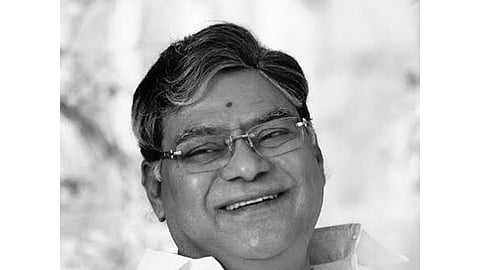

HYDERABAD: He never needed a monologue. Never needed a backstory. All Kota Srinivasa Rao needed was a minute, sometimes just a line, and he’d turn a routine scene into something bordering on the divine. He didn’t just act. He inhabited.
Like water taking the shape of every vessel, Kota morphed into whatever the story demanded, bringing with him a weight of experience, a smile lined with irony, a glare laced with secrets, and pauses that let the silence throb.
Over 750 films. Four languages. Every emotion in the book. But Kota Srinivasa Rao’s gift wasn’t just volume. It was precision. Where other actors acted at you, Kota acted with you, turning even the most transactional roles into studies of human nature.
The father, the fraud, the philosopher
To see Kota play a father was to understand that parenting isn’t always loud. In Bommarillu (2006), he was a gentle patriarch who knew when to yield. In Aadavari Matalaku Arthale Verule (2007), he brought a practically tender authority that felt lived-in, never theatrical. In Idiot (2002), his annoyance as Ravi Teja’s father crackled with bemused affection.
He didn’t act fatherhood, he understood it, sculpted it scene by scene.
Now pivot to his villains, Kota’s baddies were never generic. They were philosophical. See Athadu (2005), where as a corrupt politician, his end feels less like a punishment and more like karma catching its breath. Or in Sarkar (2005), where he delivered the line “Style South, operation complete North” with a chill so cool, it could freeze lava. His villainy didn’t shout. It smirked in ways that a man truly became sinister.
Everyday man of extremes
Kota Srinivasa Rao had this rare talent of taking extremes, greed, lust, anger, delusion, and shrinking them into something heartbreakingly human. In Aha Naa Pellanta (1987), as the iconic miser Lakshmipati, he made you laugh with him, not at him. Petty, yes. But never shallow.
And let’s not forget Money (1993), where he played a role dipped in black humour and portrayed with such joie de vivre that it made cynicism seem like Greek epic. It was as though Kota knew the tragic clown inside every villain. He found it. Nourished it. And brought it to the screen.
Even when death visited his characters, as in Athadu or Julaayi (2012), Kota didn’t just cough blood and collapse. He performed the death. With grace, with finality, with a practicality that made even his character’s demise feel like a parting wisdom. With him gone, we don’t just lose an actor, we lose the punctuation marks between our highs and lows.
He is irreplaceable not because there will be no one as talented, but because no one else can play the exact emotional grammar Kota architected into every performance.
Goodbye, Kota gaaru. You didn’t steal scenes. You became them. And in doing so, you made a generation of us believe that even the smallest moments could contain universes.
