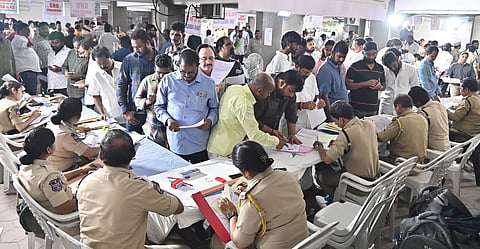

The Telangana High Court on Saturday declined to stay the state government’s decision to extend the last date for submission of applications for retail liquor shop (A4) licences.
Justice N Tukaramji, hearing the writ petition filed by D Venkateshwara Rao and others from Hyderabad, clarified that any further government action would remain subject to the final outcome of the petition. After two days of arguments, the court directed both parties to file written submissions by Monday and reserved the matter for orders.
Additional Advocate General Imran Khan, representing the state, argued that the Excise department is empowered to postpone the selection process for liquor shop allotments. He explained that “selection” in the notification covers multiple stages, including applications, scrutiny, drawal of lots, and rejection, not merely the drawal of lots as claimed by petitioners. Khan added that the extension from October 18 to 23 was a policy decision due to a statewide bandh call.
Senior counsel Avinash Desai, for the petitioners, said the extension increased applications, adversely affecting applicants’ chances of selection. With the court reserving its orders, the legality of the government’s extension is awaited.
Interim stay on eviction of Radiant High School
Reiterating that protecting students’ rights was a constitutional duty of the state, Justice Surepalli Nanda of the Telangana High Court set aside the City Civil Court’s earlier orders and issued interim stay orders in a property dispute.
The judge was hearing petitions filed by students of Radiant High School, Musheerabad, including Shariba Tasneem, challenging the city civil court order directing execution of a warrant in the property dispute.
The students argued that the October 7 order violated their fundamental rights under Articles 21 and 21-A and sought to prevent any disruption to their education. They asked the high court to suspend the civil court’s warrant until June 30, 2026, and to direct the Director of School Education and other authorities to safeguard students’ interests under the Right to Education Act. They also sought oversight by the State Commission for Protection of Child Rights to ensure continuity in their studies.
Justice Nanda noted that the Director of School Education had failed to act on the students’ representation, and issued the interim orders.
