
HYDERABAD: When Telangana was carved out as a state in 2014, there was an expectation that the new government would leverage the state’s rich heritage, natural landscapes, vibrant craft traditions and cosmopolitan capital to build a strong tourism identity.
Yet, more than a decade later, that promise remains only partially fulfilled. “Tourism in Telangana has largely unfolded in a haphazard manner, marked by piecemeal projects and scattered initiatives, lacking a comprehensive vision,” said a senior official.
The official added that one of the key reasons for this, has been the frequent change of officers in tourism-related departments. “The officers kept changing every few months. Each one came in with their own priorities, and the long-term vision never took root,” said an official.
Another factor, he pointed out, was the absence of a formal tourism policy. “For nearly 11 years after the formation of Telangana, there was no clear tourism policy. That has been a serious gap,” the official added.
Jayesh Ranjan, Special Chief Secretary (Tourism & Culture, Industries & Commerce, IT, told the TNIE, “The pandemic did not alter much either. Unlike some states that reinvented tourism post-Covid-19 with digital campaigns and new experiences, Telangana’s efforts continued in the same low-key, uncoordinated way. But now, the government has decided that enough is enough.”
A comprehensive reset is on the cards, timed with World Tourism Day on September 27, when the state will formally unveil Tourism 2.0 — an ambitious strategy to transform the state into a must-visit destination on India’s tourism map, he added.

The big picture
At the heart of Tourism 2.0 is the identification of 27 special tourism areas across the state. However, instead of spreading thin, Telangana has chosen to focus its energy on nine destinations in the phase-I.
“Our benchmark is that in each of these places, people should find enough to do for at least two to three days,” Jayesh Ranjan said. “The experience will be multi-faceted- whether you are a child, a student, a professional, a history buff, an adventure seeker, or a spiritual traveller, you will have options.”
This marks a shift from the way tourism has been imagined so far. Instead of tourists making quick stopovers, the government wants to curate immersive journeys where people linger longer, spend more, and take back richer memories.
Pochampally: Beyond sarees
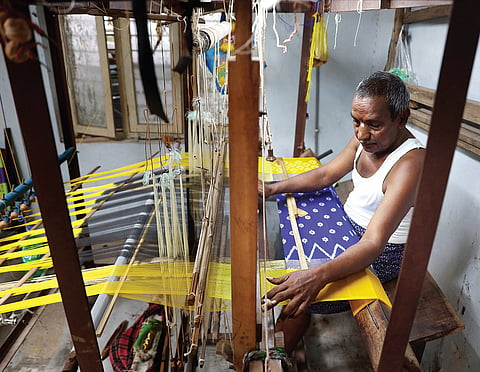
Nowhere is this new philosophy more evident than in Pochampally, a town just outside Hyderabad long known for its ikat sarees. “Until now, most visitors went to Pochampally for one reason only: to buy sarees at a lower price than in Hyderabad. The experience was transactional, and beyond shopping, there was little to do,” Jayesh Ranjan said.
Tourism 2.0 reimagines Pochampally entirely. “In Pochampally, we have curated 15 distinct activities, five of them are related directly to weaving,” the senior official added. A 0.5-km-long street has been identified, where tourists can walk with a local guide and enter a dozen homes, each showcasing a unique weaving practice.
One household may use the ancient pit loom, while another can demonstrate the modern asu loom. Some homes specialise in double ikat weaving, others highlight the role of women weavers, and a few are led by master artisans. In just an hour, a visitor can journey through centuries of textile evolution.
A new museum is also being developed, which will map Telangana’s weaving clusters — from Gadwal and Narayanpet to Siddipet, Warangal and Adilabad. It will explain styles, techniques, histories and cultural uses in an engaging format, the senior tourism official added.
There’s also an interactive weaving room, where visitors, especially children, can try weaving themselves and take home a self-made souvenir. Microsoft’s digital archive of Pochampally designs, some dating back 50-60 years, will also be opened to tourists. “Some of these designs were so complex that they were never woven. Now, with modern technology, they can be recreated. Visitors will be able to see how tradition and technology come together,” stated Jayesh.
But weaving is only part of the story. Few know that the Bhoodan Movement began in Pochampally in 1951, when Vinoba Bhave persuaded landowners to voluntarily donate land to the landless. A new Bhoodan Museum will tell this tale with sociological insights and interactive exhibits. Visitors will also learn about vernacular architecture, taste hyper-local delicacies, and even enjoy boating and treasure hunts.
The town’s cultural roots run deep. The weaving community, the Padmashalis, worship Markandeshwara Swamy, and their temple will be integrated into the tourist trail. Pochampally also houses India’s first village post office (VPO), whose origins will soon be displayed for visitors.
Recognising that Pochampally alone may not sustain a two-to-three-day itinerary, the government is linking it with nearby Bhongir. Here, a massive monolithic rock invites adventure seekers to try climbing, while the Bhongir Fort, rich with history, is being developed with a new museum displaying photographs, old weapons, and the stories of Telangana’s forts. For those seeking spiritual solace, the Jain temple at Kolanupaka rounds off the circuit.
“Together, Pochampally, Bhongir, and Kolanupaka will become a cluster that appeals to multiple interests — craft, history, spirituality and adventure,” added Jayesh Ranjan
Along with Pochampally and its cluster, eight other destinations are part of the first phase. These include Hyderabad, Yadagirigutta, Tribal Cluster, Bhadrachalam, Somasila, Warangal, Nagarjunasagar, Vikarabad and Nallamala Circuit.
PHASE-I: 9 key destinations
Hyderabad
Yadagirigutta (spiritual)
Tribal cluster
Bhadrachalam (river + religious)
Somasila (water-based ecotourism)
Warangal (heritage)
Nagarjunasagar (spiritual + nature)
Vikarabad (nature + adventure)
Nallamala Circuit (eco & wildlife)
New tourism categories
Beyond destinations, Telangana is also announcing four entirely new categories of tourism
Medical Tourism: Combine healthcare with curated experiences
Hyderabad is already home to world-class hospitals, drawing patients from abroad. The tourism department sees a big opportunity in combining healthcare with tourism. Families who come here for treatment can also explore curated local experiences
Film Tourism: Telangana as a film-friendly state for global cinema
Hyderabad may boast Ramoji Film City, but film producers often complain about bureaucratic hurdles. The new plan addresses this by creating a film portal listing pre-approved locations with logistical details. To make Telangana film-friendly not just for Telugu cinema, but for Bhojpuri, Bengali, Gujarati, Marathi, Turkish, Iranian, Japanese and even Hollywood productions
MICE 2.0 - Business + Leisure (Meetings, Incentives, Conferences, Exhibitions)
Hyderabad already attracts business travellers. Now, we will integrate tourism into their itineraries. Conference delegates should not only attend meetings but also experience Telangana, officials said
Wedding Tourism: From luxury to rustic destination weddings
With Falaknuma Palace as a luxury option, Telangana hopes to rival Rajasthan. “But we are not limiting ourselves to five-star weddings. We want to promote resort-style destinations like Vikarabad, Nagarjunasagar, and Somasila as wedding hubs,” said Jayesh Ranjan
Customised Tours: A game-changer one-stop tour planning with full transparency
Perhaps the most innovative idea is the launch of Customised Tours, touted as the first of its kind in India. Here, tourists can spell out their needs — from transport and accommodation to specific experiences — and the government will handle the rest. “There will be no hidden costs. If anyone is asked to pay even 20 extra for parking, we will reimburse them 10 times the amount. We want to set a new benchmark of transparency”, said the tourism secretary
The eco-tourism thread
An ecological consciousness runs through all nine destinations. Whether it’s trekking in Adilabad, boating in Somashila, or culinary trails in Pochampally, eco-tourism is being built into every master plan. “Sustainability is not an add-on. It is at the heart of new plan”, said Tourism Secretary
Public-Private Partnerships For resorts, eco-lodges, adventure zones
Recognising the need for investment and expertise, the government is actively encouraging Public-Private Partnerships (PPPs). Where destinations lack accommodation, private players will be invited to set up resorts, wellness centres and spas. Adventure activities, too, will be opened for private collaboration
The road ahead
Jayesh Ranjan said, “The plans are ambitious, but execution will be the real test. Telangana must overcome its history of officers change and policy delays. Investors will need confidence that promises translate into infrastructure on the ground. Environmental concerns, too, will have to be balanced with rising tourist numbers.
Yet, for the first time since its formation, Telangana has articulated a clear, comprehensive tourism vision. It is no longer about piecemeal attractions but about curated journeys, transparent systems, and partnership-driven growth, Telangana is more than Charminar or biryani. It is forts and forests, ikat and innovation, faith and festivals, food and film.
We want the world to see that.” If the state can deliver on this promise, Tourism 2.0 could finally give Telangana the identity it has lacked in the past decade — not just as India’s youngest state, but as one of its most compelling destinations