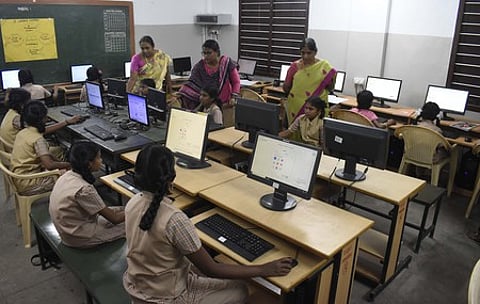

HYDERABAD: At a time when AI is the buzzword, the gap between policy intent and classroom reality is shocking — only 21% of government schools in Telangana have computer facilities despite the state introducing coding and artificial intelligence (AI) into the curriculum for Classes 1 to 9.
Midway through the academic year, regular classes in coding, AI and related digital subjects have largely not begun in government and local body schools, teachers said. While digital textbooks have been distributed and new subjects formally notified, implementation has been held up by a lack of trained teachers, inadequate infrastructure and poor internet connectivity.
According to teachers, training programmes conducted for handling coding and AI were limited to about two days, which they said was insufficient for practical teaching. “The subject exists on paper, but there is no real hands-on exposure for students,” a teacher said, pointing to outdated or insufficient computer systems in many schools.
As part of the curriculum rollout, a separate textbook with about 15 chapters has been designed for Classes 6 to 9. Under the plan, mathematics teachers are expected to handle coding and data science, physical science teachers are expected to handle artificial intelligence and physical computing, and English and social studies teachers design thinking and digital citizenship.
We don’t have even basic training: teachers
The courses apply to Model Schools, Kasturba Gandhi Balika Vidyalayas (KGBVs) and institutions run by the Telangana Social Welfare Residential Educational Institutions Society (TGSWREIS). Teachers said that without subject-specific, software-trained staff, the allocation has remained largely theoretical.
Official data underline the constraints. The Unified District Information System for Education (UDISE) 2024–25 report shows that only 21% of government schools in Telangana have computer facilities, compared with the national average of 64.7%. Of the 30,057 government schools in the state, only 6,409 have working desktops or PCs, many without proper internet connectivity or dedicated computer labs. Only 2,529 middle and secondary schools have ICT labs, while primary schools are yet to be equipped.
Teachers who spoke to TNIE also flag the absence of regular maintenance. They suggest appointing mandal-level software technicians to ensure timely repairs and upkeep of computer labs, along with longer, expert-led training programmes for teachers.
While welcoming the inclusion of AI and coding as future-oriented subjects, teachers and unions say the focus should first be on basic readiness. They call for fully functional computer labs with at least 20 working systems per school, proper teacher training and regular inspections. They also point out that recruitment to address staff shortages is critical, and note that technology cannot substitute for teachers in classrooms.
