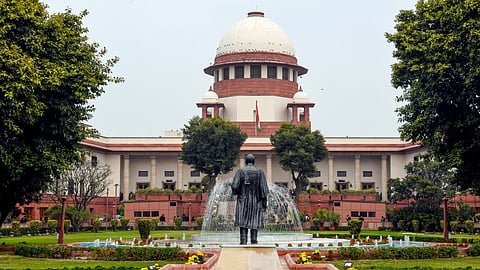

NEW DELHI/HYDERABAD: The Supreme Court on Friday granted Telangana Legislative Assembly Speaker Gaddam Prasad Kumar a “last opportunity” to decide the remaining pleas in alleged defection cases, a day after he dismissed disqualification petitions against BRS MLAs Pocharam Srinivas Reddy and Kale Yadaiah.
In its orders, a bench of Justices Sanjay Karol and Augustine George Masih warned the Speaker to conclude the process without further delay. The bench said it was granting a “last opportunity” and directed the Speaker to file an affidavit, along with a detailed status report, within two weeks explaining the steps taken so far in adjudicating the disqualification pleas. It made it clear that no further extension would be granted and cautioned that non-compliance would invite consequences.
Two more petitions rejected
Meanwhile, the Speaker, in his orders delivered on Thursday, held that there was no material to establish that the two MLAs had formally defected from the BRS. He ruled that both would continue to be recognised as BRS legislators, observing that the evidence placed before him did not show a change in political affiliation.
This was the second round of rejections by the Speaker in the ongoing defection controversy. In December, Gaddam Prasad had dismissed disqualification petitions against five other MLAs — Tellam Venkat Rao, Bandla Krishna Mohan Reddy, T Prakash Goud, Gudem Mahipal Reddy and Arekapudi Gandhi citing lack of proof of defection to the ruling Congress.
Three petitions remain. Hearings in the case of Jagtial MLA Sanjay Kumar have concluded and orders are awaited, while proceedings against Danam Nagender and Kadiyam Srihari are still pending.
In the Supreme Court, senior advocates Abhishek Manu Singhvi and Mukul Rohatgi, appearing for the Speaker and the State of Telangana, sought a further adjournment, citing delays caused by the Speaker’s recent eye surgery. The senior advocates submitted that orders had been passed in seven cases and one matter had been reserved for judgment, and sought additional time to complete the process.
Repeated extensions dilue authority: counsel
Opposing any further leeway, senior advocate Dama Seshadri Naidu, representing one of the petitioners, argued that repeated extensions undermined the authority of the court. He contended that despite clear directions, the Speaker continued to seek adjournments, and argued that the majesty of the court was not being upheld.
The present warning comes against the backdrop of a contempt notice issued by the apex court on November 17, 2025, after the Speaker failed to comply with its earlier direction to decide the disqualification pleas against 10 BRS MLAs who had defected to the ruling Congress.
At the time, the Supreme Court described the delay as the “grossest kind of contempt” and directed the Speaker to act within two weeks.
SC had given Speaker three months
Earlier, on July 31, a bench led by then Chief Justice of India B R Gavai had directed the Speaker to decide the disqualification pleas within three months — from July 31 to October 30 — on petitions filed by BRS leaders KT Rama Rao, Padi Kaushik Reddy and KO Vivekanand. The bench had observed that political defections, if not curbed, had the potential to disrupt democracy.
Setting aside a Telangana High Court judgment that had diluted an earlier single-judge direction, the apex court had said disqualification proceedings should not be allowed to be protracted. It also noted that Speakers, while deciding matters under the Tenth Schedule, act as tribunals subject to the jurisdiction of High Courts and the Supreme Court and do not enjoy constitutional immunity.
The court had further directed that MLAs facing disqualification proceedings should not be permitted to delay hearings, warning that adverse inferences could be drawn if such tactics were adopted.
