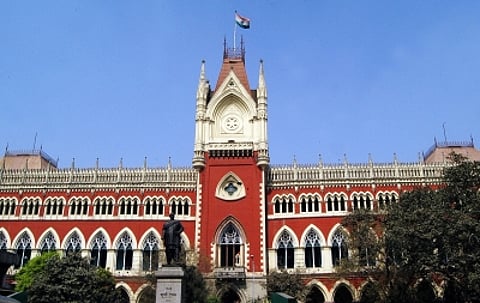

KOLKATA: Human rights activist Milan Malakar filed a petition in the Calcutta High Court on Monday, challenging the West Bengal Public Safety and Control of Anti-Social Activities Act, 2026, also referred to as the 'anti-goonda law'.
The petition filed under the division bench of the acting Chief Justice Tapobrata Chakraborty challenges the constitutional validity of the Act and urges the court to issue a stay order on the legislation.
The hearing of the case is expected to be held this week.
Sabyasachi Chatterjee, an advocate of the High Court and a CPI-M leader, shared the matter in a social media post.
“This legislation is a transformation of the British colonial law, the 'Calcutta Goonda Act’ of 1923. The same process used to identify ‘goonda’ is being brought into force even after a century," Chatterjee said.
“The definition of ‘goonda’ as per the newly formed legislation is not clearly clarified. This kind of law is unconstitutional, as it does not provide any specific statute against a specific criminal. The government can use its power against any citizen at any time through this law. Our Constitution does not approve the State to implement such kind of uncontrolled power,” Chatterjee told the media today.
The West Bengal Public Safety and Control of Anti-Social Activities Act, 2026 and the West Bengal Maintenance of Public Order (Amendment) Act, 2026, came into force on Monday after being passed by the State Legislative Assembly about two weeks ago.
"The 'anti-goonda law' empowers the district magistrates and police commissioners to order preventive detention of persons for up to 12 months if they are likely considered to have indulged in anti-social activities," according to officials.
The detention order has to be approved by the State government within 15 days and be reviewed by an advisory board headed by a serving or retired High Court judge within three weeks.
"The legislation also broadens the definition of 'goonda' to include persons allegedly involved in organised crime syndicates, financiers or facilitators of such activities, repeat offenders under the Arms Act, the Explosive Substances Act and the NDPS Act, and those considered generally dangerous to society," they said.
"The 'anti-goonda law' significantly covers actions that create fear or panic, threaten public order, obstruct lawful trade or business, involve illegal occupation of property, or result in large-scale damage to public or private property," the officials said.
Economic and environmental offences, including illegal mining, unauthorised sand extraction and forest and wildlife crimes, have also been brought within its ambit.
The West Bengal Maintenance of Public Order (Amendment) Act, 2026 allows the government to attach and auction off the properties of accused persons to recover losses caused to public or private property during riots or violent protests.
The Chief Minister defended the legislation, asserting that the State needed stringent legal provisions to curb political violence, organised syndicates and vandalism, while pointing out that existing laws lacked adequate deterrence.
