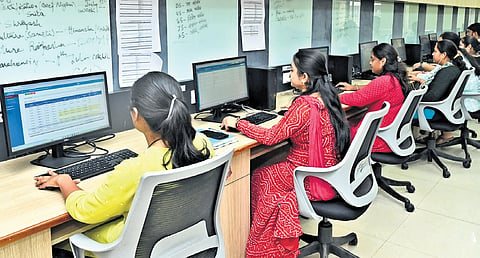

When Chief Minister Vishnu Deo Sai launched the first digital file in Chhattisgarh on August 24, 2024, it was more than a ceremonial event. It marked the beginning of a transformation in the way government offices function across the state. “The vision is not merely figurative but a series of administrative reforms to be complied with in the future,” the CM had said at the launch, signalling his commitment to a fully paperless, efficient administration.
In the past year, the e-office system has taken root in every corner of government functioning—from the state secretariat and all directorates to divisional offices and district headquarters. “We have embarked upon fully paperless processing of files in Chhattisgarh. The e-office system ensures end-to-end paperless file movement covering all stages—dak receipt, diarisation, Digital Signature Certificate or e-Sign on noting and drafts, dispatch, tracking, closure of files or letters, record maintenance, and archival—all streamlined and being done seamlessly,” said CM Sai.
The impact has been immediate and visible. Bureaucratic efficiency has improved, decision-making is faster, and public service delivery has seen measurable gains. Departments are saving time and resources, and approvals are no longer delayed by the physical movement of files. “The e-office system has facilitated informed and prompt decision-making with departments saving time and enhancing efficiency at every level,” said Rahul Bhagat, Secretary (Good Governance & Convergence) in the CM’s secretariat.
Perhaps the most striking change is in the speed of governance. Earlier, important files often had to wait for the return of the Chief Minister or be sent physically to his office, sometimes taking weeks to clear. Today, with digital signatures, the CM can approve files from anywhere.

Demonstrating this commitment, Sai digitally cleared and signed essential files during official visits to Japan and Seoul in August. Political experts noted that his actions echo a widely shared, iconic image of former Prime Minister Lal Bahadur Shastri reviewing files on an airplane.
Every digitally signed file now carries a secure, time-stamped, tamper-proof record, guaranteeing legal validity and transparency. The movement and status of any file can be checked with a single click. Officers and staff across the state are encouraged to embrace technology not just as a symbolic gesture but as a tool for better governance.
The rollout of e-office began with the creation of a dedicated state portal, eoffice.cg.gov.in, exclusively for electronic file management. With districts already covered, the system is now being extended to sub-district offices, including tehsils and janpads, ensuring last-mile penetration and complete coverage.
Training and sensitisation of staff have been a key focus. Over 100 awareness sessions have addressed hesitation and myths about the system, and more than 850 hands-on training sessions have been conducted across departments. Daily online virtual training keeps staff adept, while a dedicated video conference channel operates during office hours to resolve queries in real time.
Monitoring and accountability are built into the system. The Secretary of the General Administration Department oversees daily operations, while the Principal Secretary to the CM conducts weekly reviews. Continuous tracking by the deputy secretary and the Project Management Unit ensures files are processed efficiently, with dashboards and audit trails providing real-time data on pending, disposed, and overdue files.
The government’s efforts have attracted attention nationally, with Chhattisgarh now planning a state-level e-governance summit on October 14. Senior IAS, IPS, and IFS officers will interact to promote innovations and reforms, focusing on creating a culture of administrative excellence for both officers and citizens, said Bhagat.
The benefits of the e-office system extend beyond administrative efficiency. The process reduces paper usage, contributing to environmental conservation. It enables the simultaneous dispatch of letters, circulars, documents, and reports to multiple departments, saving manpower and fuel that would otherwise be used to physically transport files. “The implementation of the e-office system fosters simplified, accountable, and transparent governance with enhanced overall productivity of work,” said Ashutosh Verma, section officer in GAD.
CM Sai has made clear that technology should be an integral part of governance. “With responsive administration, the government hopes the move will lead to citizen-centric governance with quicker review, approvals, faster decision-making, and reduce corruption,” he stated.
In just one year, what began as a single digital file has grown into a statewide system. It is reshaping government work culture. The e-office system has brought Chhattisgarh to the forefront of digital governance, proving that when political will meets sustained effort, transformative change in public administration is possible.