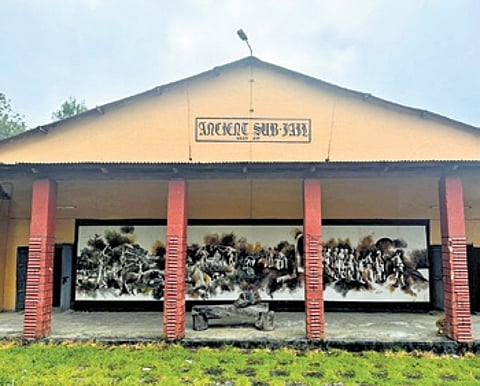

CHENNAI: Perched in the misty folds of the Nilgiris stands a forgotten relic of colonial rule, the 19th-century Naduvattam Jail. Once echoing with the clatter of chains and the weary footsteps of convicts shipped into labour on British cinchona plantations, the crumbling red-brick barracks are now poised for a transformation.
The Tamil Nadu government is planning to convert this centuries-old prison into a world-class museum and eco-tourism hub, weaving together history, culture and conservation. The Tamil Nadu Wilderness Experiences Corporation Ltd (TNWEC), which has applied to the Union environment ministry for clearance seeking diversion of 4.78 hectares, says the project will breathe new life into the site.
Nilgiris District Forest Officer S Gowtham confirmed that a Bengaluru-based consultant has been engaged to prepare a detailed project report (DPR). “Extensive research is underway. A preliminary presentation has been made, and the consultant is consulting the State Archives to document the layered history of the jail and create an interactive museum experience,” he said.
Built in 1865, decades before the infamous Cellular Jail in the Andamans, the Naduvattam Jail was designed to house convicts deployed as labourers on cinchona plantations. At the time, malaria and fever were rampant, and quinine extracted from cinchona bark was considered nothing short of life-saving.
TNIE visited the ancient jail recently and the records showed Superintendent WG McIvor, who successfully acclimatised cinchona to Indian soil, had pressed the colonial government for convict labour after struggling to recruit locals and tribal workers. By 1865, the sprawling prison with lofty halls, fireplaces, dispensaries and wooden plank beds was ready. The following year, 560 convicts, guarded by just six warders and 32 policemen, arrived to fuel the crown’s quinine ambitions.
Historical records reveal that it also housed Chinese prisoners transported from the British Straits Settlements of Singapore, Penang and Malacca due to overcrowding there. Many never returned. Instead, they stayed back after release, married local women and founded what came to be known as the “Chinese Village.” Generations later, their descendants remain part of the Nilgiris’ multicultural fabric.
The TNWEC proposal, now before the Union environment ministry for diversion of 4.78 hectares of forest land, aims to transform the site into a low-impact eco-tourism hub. According to TNWEC director Vismiju Viswanathan, the plan includes eco-friendly cottages, meditation spaces, walkways, an amphitheatre, tea gardens, trekking and birding trails, and guided heritage tours.
Authorities stress that the development will be conservation-led. The site has no significant tree cover but is frequented by wildlife, including tigers, leopards, gaur, sambar and wild boar. “Mitigation measures to manage human-wildlife interactions will be mandatory. The site’s unique combination of scenic beauty, colonial history and cultural heritage gives it tremendous potential. This can be a model for sustainable tourism in the Nilgiris,” the DFO said.
Naduvattam’s history cannot be told without cinchona. Sir Clements Markham, a British civil servant, brought seeds from South America in the 1860s, convinced that the Nilgiris’ misty slopes mirrored the Andes. Under McIvor’s stewardship, cinchona flourished, and the Nilgiris soon became the backbone of India’s quinine supply.
Remnants of this era linger. A former quinine factory has been repurposed by TANTEA, the Tamil Nadu Tea Plantation Corporation, into a tea museum, further cementing the region’s plantation legacy.
District Collector Lakshmi Bhavya Tanneeru, while recommending the forest diversion, clarified that the project does not infringe on any recognised rights of Scheduled Tribes or traditional forest dwellers under the Forest Rights Act.
Officials hope the project will not only showcase colonial history but also provide a platform for local culture.
