
NEW DELHI: As 2026 begins, India’s health sector faces formidable challenges. The main priorities include improving health infrastructure, addressing shortages of medical staff in rural and remote areas, and tackling the rising disease burden that strains the public health system.
Although some progress was made in 2025, India now requires new technologies, evidence-based treatment guidelines, affordable healthcare, and sustained efforts to promote prevention and healthy living.
India continues to fight infectious diseases such as TB, dengue, and malaria, while also seeing a fast rise in non-communicable diseases (NCDs) like heart disease, diabetes, and cancer.
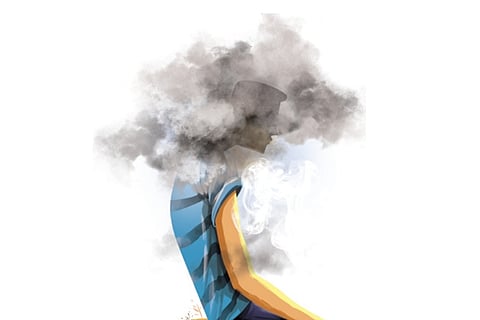
Air pollution continues to pose a serious health threat. Delhi and many other Indian cities often rank among the world’s most polluted, particularly for PM2.5, a fine-particle pollutant. The 2025 Lancet Countdown on Health and Climate Change report said PM2.5 pollution caused over 17 lakh deaths in India in 2022, with petrol use for road transport linked to 2.69 lakh of these deaths.
Dr Rajeev Jayadevan, former president of the Indian Medical Association (IMA), Cochin, says that fine particles and chemicals in polluted air can harm many organs. This can lead to high blood pressure, strokes, heart attacks, COPD, asthma in adults, preterm births, and stunted lung growth in children.
With air pollution remaining a serious problem, both government action and personal precautions are needed. People in highly polluted areas should monitor their health, particularly blood pressure and lung function, with particular attention to children and older people.
While COVID-19 may feel like a thing of the past, India is slowly crumbling under the disease burdens, which are now affecting even adolescents.
Statistics paint a grim picture.
Cancer cases are galloping. India has the second-highest number of cancer cases in Asia and the third-highest in the world. The chance of developing cancer in a lifetime is about 11%. As per the National Cancer Registry Programme (NCRP), 15.6 lakh cancer cases and 8.74 lakh cancer deaths were reported in 2024.
With cancer cases expected to reach two million by 2040, the government's focus will not only be on rolling out the HPV vaccine to prevent cervical cancer but also to provide affordable treatment at the 200-day care cancer centres promised in the 2025 Union Budget.
India accounts for approximately a quarter of the world’s TB cases. Some steps were taken towards TB eradication, but we failed to meet the 2025 deadline.
Dengue continues to remain a significant problem. India reported 13,450 cases and 95 deaths this year.
There is some good news to look forward to in 2026. India is making progress toward eliminating malaria, aiming for zero local cases by 2027, and also plans to eliminate Lymphatic Filariasis in two years.
Obesity – cause for many lifestyle diseases - has reached epidemic proportions. It is estimated that by 2050, India will have 450 million overweight or obese adults.
Obesity costs India’s health system approximately $2.4 billion annually. Though the year saw the rollout of weight loss drugs, primarily used to manage diabetes, experts warned against overdependence.
A direct link to obesity is diabetes. India is the ‘diabetes capital of the world.’ The ICMR-INDIAB study has said that India has 101 million people with diabetes, 136 million with prediabetes, and 315 million diagnosed with high blood pressure.
According to Dr V. Mohan, Chairman of the Madras Diabetes Research Foundation, which was involved in the ICMR study, India needs to conduct regular screening for diabetes. “I hope the percentage of undiagnosed diabetes in India drastically reduces due to widespread screening for diabetes in the coming year.”
Everything hinges on diet. More and more Indians are hogging on unhealthy junk food, which is high in sugar, salt, and unhealthy fats. This dramatically raises the risk of chronic diseases like heart disease, stroke, diabetes, and some cancers.
2026 will be a crucial year, as warning labels on packaged food may finally be announced after a four-year delay.
According to Dr Arun Gupta, the co-author of The Lancet Series on Ultra-Processed Foods (UPFs) and Human Health, “I hope policymakers and judiciary use the evidence from the Lancet Series to frame regulations such as Front-of-Pack Nutrition Labelling (FOPNL), advertisement bans, taxation, and the policy development process is kept free from the food industry.”
While much of the government's attention will be on expanding health infrastructure, what is also important is the health of the healthcare workers. 2025 saw several doctors and medical students dying by suicide, highlighting the need for safer, healthier workplaces for healthcare workers.
A Federation of All India Medical Associations (FAIMA) study found that doctors face a toxic work culture, often working under poor conditions, with weak infrastructure and insufficient staff. Long hours, heavy workloads, and low salaries strain them mentally and physically. Another study by the Indian Medical Association (IMA), conducted by Dr Jayadevan, found that many doctors in government hospitals work unsafe hours, particularly during night shifts.
Kerala-based Dr K V Babu, an ophthalmologist and health activist, hopes that 2026 will bring safer workplaces where healthcare workers can work without fear.
Hope 2026 will bring a healthier, fitter India.
