
NEW DELHI: The Centre will table the Public Examinations (Prevention of Unfair Means) Amendment Bill, 2026, in the Lok Sabha on Monday, proposing stricter punishments, time-bound investigations and trials, and the creation of a Special Task Force (STF) to investigate serious offences related to public exams.
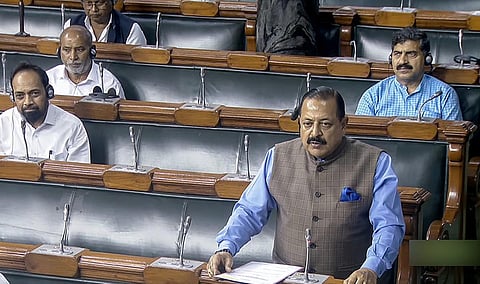
According to the Lok Sabha Secretariat, Union Minister Jitendra Singh will move the Bill in the House. The draft legislation was circulated among MPs shortly before the resignation of Union Education Minister Dharmendra Pradhan.
The Bill seeks to amend the Public Examinations (Prevention of Unfair Means) Act, 2024, which was enacted to curb unfair means in public examinations and safeguard their transparency and fairness.
According to the Statement of Objects and Reasons, the amendments have been proposed in view of recent incidents of question paper leaks and examination malpractices.
Under the proposed law, individuals found resorting to unfair means will face imprisonment of five to 10 years, compared with the existing punishment of three to five years. The maximum fine has also been increased from Rs 10 lakh to Rs 50 lakh.
The Bill also proposes stricter penalties for service providers involved in conducting public examinations. The maximum fine has been increased from Rs 1 crore to Rs 5 crore, while the period during which a defaulting service provider can be barred from conducting public examinations has been doubled from four years to eight years.
Directors, senior management and persons in charge of service providers found complicit in offences under the Act will face a minimum imprisonment of five years instead of three years. The fine has also been increased from Rs 1 crore to Rs 5 crore.
For organised crimes related to public examinations, the minimum imprisonment has been increased from five years to seven years, while the minimum fine has been raised from Rs 1 crore to Rs 10 crore.
The Bill empowers the Central Government to constitute a Special Task Force (STF) to investigate offences under the Act wherever necessary. It also introduces time-bound criminal proceedings. Investigations by the police, a Central Investigating Agency or the proposed STF must be completed within two months.
