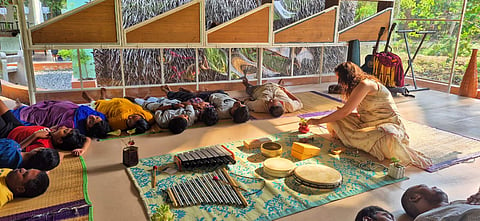

Under a sky that flickers with fireflies, where the sound of wind and wings, and the scent of wet earth fill the air, lies a place that refuses to be defined. It is not a commune, an ashram, or a farm and yet, somehow, it is all of these at once.
Hotaru Farmstead, located at Parambilpaalam in the city, is a “conscious living community”, a space where people come together to live with the natural world, not above it or apart from it, but within it.
“We started as a small group of like-minded people from different fields such as modern medicine, IT, ayurveda, engineering, and social work,” says Ejaz Salim, the community’s architect and a founding member.
“What brought us together was the idea of co-living and co-existing without boundaries, sharing resources and supporting each other through social enterprises. That became the foundation of Hotaru.” The name Hotaru, which means firefly in Japanese, comes from the abundance of fireflies on the land they live on.
The community’s mission centers on fostering mindful coexistence with all natural beings while promoting sustainability, inclusivity, and social cohesion. Hotaru encourages collaboration and resource sharing, practices convivial conservation, supports autonomous social enterprise initiatives, and prioritises evidence-based, warm-hearted decision-making.
“The aim is to create a living space that is not abstract, but edible, liveable, buildable, and timeless,” smiles Ejaz.
Hotaru’s built environment spans over 6,000sq ft, including classrooms, dwelling units, community halls, dining facilities, and agricultural production units. The spaces are designed to be material-sensitive, energy-efficient, minimal, utilitarian, and enjoyable to inhabit.

Ejaz, who has experience in renewable energy and environmental stewardship, designed the spaces to optimise wind flow, natural light, and sustainable material choices.
“Agriculture is a core part of our community. With just over 50,000sq.ft under cultivation, we practise what we call ‘Climate Smart Agriculture’, focusing on crop diversity, nutritional enhancement, and inclusive farming,” he explains.
“The farm is barrier-free, so people of all abilities can participate. Most of our daily dietary needs come from this cultivation, and any surplus produce is used for trade.”
With that their mission is to explore the interconnectedness of all living beings and create a space for learning, healing, and living fully. Through their convivial conservation efforts, the community is home to over 500 species of plants, birds, reptiles, insects, fish, and animals.
By applying traditional principles of land use, water management, and greening, they are developing a “micro forest” of about 90,000sq ft.
“Hotaru is also home to several social initiatives,” says Ejaz. “Our Helping Hands initiative offers vocational free training for people with special needs. Trinita, another NGO, provides holistic palliative care. The Sacred Moo is a dairy farm focused on deriving natural ayurvedic medicine. Malabar Rose is a cafe that blends food craft, self-care, and empowerment for people with disabilities. Finally, Dot Greens (.greens) provides agriculture-based solutions and healing services. Together, these initiatives create social impact and generate employment.”