
Earlier this year, when I saw Mukesh Ambani promoting someone's stock trading venture on my socials, I went aww... What a great man, I thought: despite being India’s richest, here he was, generously helping a poor sod make money in the stock market. How noble! How philanthropic! How utterly, magnificently… out of character! That’s the benefit of having a journalistic mind; delusions don’t last long. This one survived the duration of a Google search, as I discovered to my horror, not only was the video a deepfake, but it was also used to rob many, including a Bengaluru-based chartered accountant of Rs 23.20 lakh.
The irony hit me, India’s richest man had been digitally puppeteered to turn many poor.
Welcome to India in the age of Artificial Intelligence, where seeing is no longer believing, deepfake wares have replaced street hawkers and you may walk unafraid in a crowded street but have to clutch your digital wallets tight when you’re on the phone because you don’t know what deepfake will assail you from what corner.
The Celebrity Cavalry Charges into Court
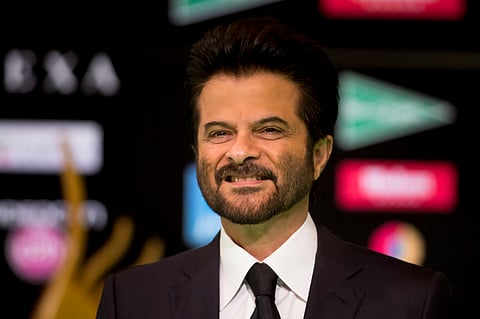
Now, if you've been following the news lately, you'd know that Bollywood has suddenly discovered the courts with the enthusiasm of a fresher discovering the college’s chai ki tapri. First came Anil Kapoor, who in 2023 secured a landmark Delhi High Court order protecting his personality rights – his name, image, voice, and his iconic "jhakaas" catchphrase – from unauthorised commercial exploitation. The victory, a sort of first in the world, landed him on the cover of Time Magazine as one of the 100 most influential people in AI, which initially confused everyone. "Anil Kapoor? AI? Has he been using artificial intelligence to maintain his ageless looks?"
But no, Kapoor's inclusion was precisely because he took a stand against the digital piracy of his personhood, setting a precedent not just in India, but globally, coming as it did during the SAG-AFTRA Hollywood strike of 2023, one of whose fights was against AI.
Following his lead, we now have an entire baarat of celebrities marching to the courthouse: Aishwarya Rai Bachchan, Abhishek Bachchan, Hrithik Roshan, Suniel Shetty, Akshay Kumar, Karan Johar, Asha Bhosle, Kumar Sanu, Jackie Shroff, etc. - the list growing faster than the ego of a newly minted star. Call them India's Avengers, except the Thanos they’re battling are unauthorised merchandise sellers, deepfake pornographers, and AI chatbots impersonating them – voices, faces, accents, everything.
Akshay Kumar's case is particularly interesting. The actor approached the Bombay High Court after discovering deepfake videos showing him as Uttar Pradesh Chief Minister Yogi Adityanath, and another showing him making controversial remarks about Rishi Valmiki - content that triggered protests across multiple regions. One can only imagine his confusion; as if doing half a dozen films a year is not enough, now he has to even run a state government?
Granting an ad-interim relief to him on October 15, the Bombay High Court’s Justice Arif S Doctor, in his order, wrote: “What is truly alarming in a number of these cases is the realistic nature of deep fake images/videos that are being created by using Artificial Intelligence (AI). Both in the context of images and videos, the morphing is so sophisticated and deceptive that it is virtually impossible to discern that the same are not genuine images/videos of the Plaintiff.”
Touche, my lordship.
India: A Deepfake Disaster Waiting to Happen
Now, the other problem with deepfakes is porn. While researching this piece, I visited some popular porn sites and searched for names of Indian celebrities, but couldn’t find many. However, previously, I have indeed seen porn sites flooded with celebrity deepfakes. Then there are provocative deepfakes on social media, like the famous Rashmika Mandanna one from 2023, where her face was morphed onto other women’s bodies. The actress called it "extremely scary," and rightly so. But here's the thing – while Rashmika's case affects her directly and profoundly, deepfakes like those of Mukesh Ambani hurt millions of potential victims who might fall for investment scams. Akshay Kumar went to court because his deepfakes had the potential to cause unrest in the country.
Here's the uncomfortable truth: India, with our stratospheric population mixed with equally high unemployment levels, is a petri dish for fraud. We are a cesspool – and I use that word with great patriotic affection lest you come after me with trishuls – of people trying to cheat others, like it were a national sport. If we held an Olympics for digital scams, India would win gold, silver and bronze in every event and category.
In the past, you had to clutch your purse on the streets to protect your cash. Today, that has gone down thanks to good policing and technology. But digital crimes have gone up exponentially. And one of the major ways some of these crimes are being committed is by using celebrity deepfakes.
This is because the technology for creating deepfakes is already democratised: various open-source tools are available online, lowering the barrier for malicious actors. You don't need to be a sophisticated hacker anymore; you need a laptop, some free software, and an extremely flexible moral compass.
This is the reason so many celebrities are making a beeline for the courts. Does that mean there’s no way out but for these people to enrich lawyers to protect their rights from AI deepfakes in a piecemeal manner?
The Danish Solution Vs. India’s Judicial Jugaad
Denmark has figured out this problem via a proposal that states that every citizen, not just celebrities, owns copyright over their face, voice, and gait. Spearheaded by their Culture Minister Jakob Engel-Schmidt, their law, instead of granting personality rights that favour the famous, grafts biometric features onto copyright frameworks. Thus, every Danish citizen would control their face, voice, and mannerisms, just as a novelist owns their manuscript. Their law defines deepfakes as “very realistic digital representations” of a person and grants citizens the power to demand takedowns of unauthorised imitations. Violators face fines; platforms risk “severe penalties” for non-compliance, even as exemptions have been made for parody and satire.
The immediate appeal is unmistakable. Unlike laws targeting only malicious deepfakes, Denmark’s model makes all unauthorised replication illegal, serving as a strong deterrent for trolls and scammers. While Anil Kapoor won his case because his “Jhakaas” was iconic, Denmark’s law protects every citizen equally, regardless of their fame. And with the backing of the EU, this has a chance of becoming a standard for Europe, and who knows, for the rest of the world..
In contrast, India has no dedicated law protecting personality rights. We rely on what legal scholars politely call "judicial precedent" and what I’d like to call "making it up as we go along." Our courts have done admirable work, using the constitutional right to privacy under Article 21, along with provisions from the IT Act, copyright law, trademark law, and the Indian Penal Code to cobble together protections. Yet, this is nothing but using duct tape to fix a spaceship — creative and occasionally effective, as seen in the case of Apollo 13 — but not what you want when lives and livelihoods are at stake and when the law can take a progressive approach.
The Delhi High Court has been particularly proactive, establishing precedents and passing orders for the swift takedown of deepfakes and AI-generated content. But the limitation of such a piecemeal judicial approach is that it’s first reactive, not proactive. Then, it's expensive, with only celebrities with deep pockets in a position to afford to fight these battles. Worst of all, it’s inconsistent – what one court decides today might be interpreted differently by another tomorrow.
Why Codification Is Necessary
The question is not whether India should codify personality rights into law; it's why we have not done it already. Every celebrity going to court costs time, money, and judicial resources that could be spent on other pressing matters like, ummm, you know – the 2 crore pending cases.
Hence, a comprehensive personality rights law passed by parliament could provide clear definitions, establish straightforward enforcement mechanisms, set penalties for violations, and protect not just celebrities but you and me. Because let me give this to you in writing: deepfake pornography via mediums like revenge porn and nonconsensual deepfakes is a tsunami waiting to crash into our stores and harm not just celebrities but the average folks. Take Babydoll Archi, an AI deepfake of a married Assamese woman created by her ex-boyfriend that ruined the woman’s life.
Thankfully, the government has indeed issued multiple advisories, such as those in December 2023 and March 2024, which asked intermediaries to comply with IT Rules, watermark deepfake content, and make reporting easier. The only problem with this: advisories don't have the force of law; they're mere suggestions, not commands.. It's like my mom asking me, when I was a teenager, to clean my room: her dictum was technically communicated, practically ignored.
Legal experts unanimously agree that India needs a dedicated statutory framework for AI and deepfakes, similar to the EU's AI Act or the US Deep Fakes Accountability Act. The constitutional foundation already exists. The landmark Puttaswamy judgment established privacy as a fundamental right, and subsequent rulings have affirmed that personality rights are constitutionally protected. The courts, including the Supreme Court, have held that every person has the right to control his/her own life and image as portrayed to the world and to control the commercial use of his/her identity.
Hence, what I think we lack is not a legal basis but political will. Parliament must prioritise comprehensive personality rights legislation that addresses both existing and emerging concerns. The architecture must be future-proof by accommodating new technologies without requiring frequent revisions.
So here's my suggestion to whosoever’s listening: instead of making every celebrity play a legal game of whack-a-mole with unauthorised merchandise sellers and deepfake creators, how about we codify personality rights into law? Go the Denmark way by giving everyone – celebrity or common citizen – clear, enforceable rights over their own identity. Because in a country of 1.4 billion people, i.e. 1.4 billion faces, the last thing we need is to add identity theft to the list of national challenges.
After all, we already have enough problems. Let's not deepfake our way into more.
