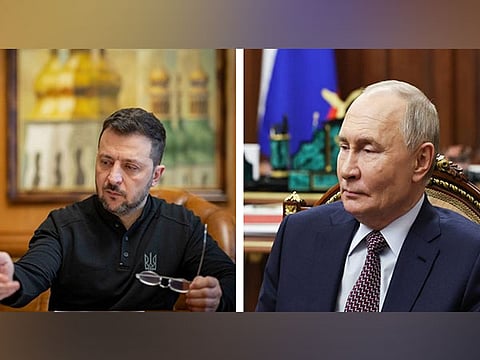

Talks involving Russia, Ukraine and the United States, aimed at exploring pathways to end Moscow’s war in Ukraine, concluded in Geneva without a breakthrough, underscoring the deep and persistent gaps between the parties despite renewed diplomatic engagement.
According to reports, the trilateral meetings stretched late into Tuesday night and resumed briefly on Wednesday, but the second round lasted only about two hours, signalling limited convergence after intensive discussions. Officials familiar with the talks said the focus remained on core issues such as ceasefire conditions, security guarantees, territorial control and the sequencing of any future negotiations. However, none of these areas saw sufficient alignment to allow for a joint statement or a concrete roadmap, BBC and CNN reported on Wednesday.
From an analytical standpoint, the brevity of the final session highlights the entrenched nature of the conflict and the constraints facing diplomacy at this stage of the war. Russia is understood to have reiterated its longstanding demands around territorial realities and security arrangements, positions that Ukraine continues to reject as incompatible with its sovereignty. Kyiv, backed by Washington, has maintained that any durable settlement must be anchored in a full withdrawal of Russian forces and credible international guarantees, leaving little room for tactical compromise.
The US role in the talks was largely that of a facilitator and pressure point, seeking to test whether limited confidence-building measures or humanitarian steps could open the door to broader negotiations. The lack of progress suggests that Washington currently sees more value in maintaining diplomatic channels than in expecting near-term results, especially as battlefield dynamics and domestic political considerations in all three countries continue to shape negotiating positions.
While the Geneva talks ended without tangible outcomes, their very convening signals that back-channel and formal diplomacy remain active alongside the war. Political analysts quoted in the reports note that such meetings often serve as probes rather than deal-making forums, helping each side assess red lines and internal cohesion. For now, however, the failure to narrow differences reinforces expectations that any meaningful movement toward ending the conflict is likely to depend less on conference rooms and more on shifts in military, economic and political calculations on the ground, they said.
