
NEW DELHI: In a sharp contrast to Europe's long-standing push for tighter regulation of artificial intelligence, the United States on Friday reiterated its opposition to global AI governance, batting instead for "real AI sovereignty" built through national capability and partnership with American technology providers, a position Washington has consistently maintained.
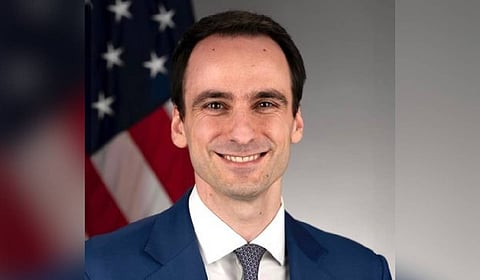
At the India AI Impact Summit 2026, marked by strong European participation, Assistant to the President and the Director of the White House Office of Science and Technology Policy, Michael Kratsios, outlined what he described as America’s alternative vision for shaping the global AI order.
"Real AI sovereignty means owning and using best-in-class technology for the benefit of your people, and charting your national destiny in the midst of global transformations," Kratsios said. He urged countries to focus on strategic autonomy and rapid AI deployment rather than pursue full technological self-sufficiency.
Leading a senior US delegation that included Under Secretary of State Jacob Helberg, Under Secretary of Commerce William Kimmitt and US ambassador to India Sergio Gor, Kratsios framed AI as a strategic asset that should not be placed under centralized international oversight.
"We believe AI adoption cannot lead to a brighter future if it is subject to bureaucracies and centralized control," he said, underscoring Washington’s resistance to global rule-making structures. Instead, he invited countries to align with what he termed the "American AI stack," arguing that such partnerships would allow nations to leverage cutting-edge tools while keeping sensitive data within their borders.
The remarks come as the administration of President Donald Trump advances a whole-of-government strategy to expand American AI exports, positioning US technology as the global benchmark and preferred platform for allied nations.
Kratsios also warned of a widening divide between developed and developing economies in AI adoption. "The pace of adoption and sophistication of deployment continues to stratify. Developing countries are falling behind developed economies at a fundamental inflection point,” he said, urging emerging nations to accelerate AI deployment across healthcare, education, energy, agriculture and citizen services.
To support that push, the US unveiled several initiatives under its 'American AI Exports Program'. These include a National Champions Initiative to integrate leading AI firms from partner countries into customised US export stacks, and a new US Tech Corps, modelled on the Peace Corps, to provide technical expertise for AI deployment in public services.
On financing, the Treasury Department will launch a new AI-focused fund at the World Bank, alongside expanded programmes at the Export-Import Bank and the US International Development Finance Corporation to lower adoption barriers.
Meanwhile, the Commerce Department’s National Institute of Standards and Technology announced an initiative to develop interoperable and secure standards for agentic AI systems.
The message from Washington was clear-- American AI, officials said, is the “gold standard” and the future of AI governance, in their view, lies not in centralized global control but in sovereign partnerships anchored in US technology.
