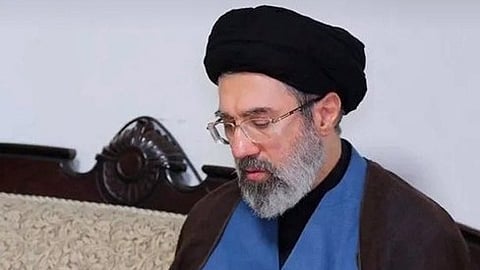

BENGALURU: Very little is known about Mojtaba Khamenei, the second son of late Ayatollah Ali Khamenei and Iran’s new Supreme Leader. Mojtaba, 56, was selected as the Islamic Republic’s Supreme Leader on Sunday by the 88-member Assembly of Experts—the clerical body that appoints the Rahbar (supreme leader).
“Mojtaba has managed to keep himself in the shadows. Only a regime insider would know of his influence. He is a student of theology, as far as can be found, and thus has no specialisation in Fiqh (jurisprudence) which is the constitutional mandate for the post of Rahbar,”
Prof Kingshuk Chatterjee of Department of History, University of Calcutta, said. He added that after the death of Khomeini, even Khamenei did not have a specialisation in Fiqh, and was selected arguably for his political acumen (the other requirement for the post since 1989).
“Mojtaba has neither. Khamenei as the Supreme Leader enjoyed more power than was originally mandated in the constitution. It would be interesting to see if Mojtaba gets to do the same or not, since unlike Khamenei he does not have the credentials of a revolutionary. It would be perfectly possible to reduce the powers of the office to its original form, or even a more reduced one,” said Chatterjee.
The foundational doctrine of the Islamic Republic of Iran, developed by Ayatollah Khomeini, establishes that a senior Islamic jurist (faqih) has the authority to rule. The system is based on velayat-e faqih (Guardianship of the Jurist).
“Mojtaba’s election as the Supreme Leader is therefore surprising. If the US and Israel had not launched the war, Iranians would have been on the streets opposing his election,” he said, adding the ongoing war is “driven by the Israeli quest for security”.
