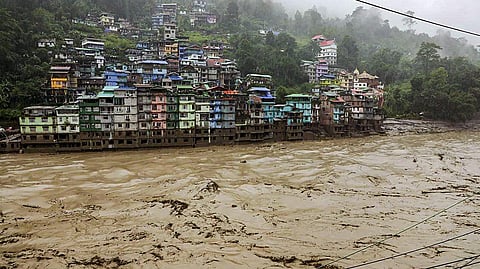

A study conducted in Japan is well-suited for India where flooding disasters have been on the rise recently. The study has shown that agricultural lands preserved around river confluences can help mitigate floods, making a strong case for ecological-disaster risk reduction (Eco-DRR) using existing environmental resources to improve resilience against flooding.
The statistical analysis in the study conducted by researchers at Tokyo Metropolitan University (TMU) showed that municipalities with agricultural land in areas with high water storage potential suffered fewer floods, with stronger correlation when agricultural land was situated near river confluences.
Eco-DRR is being seen as a more relevant alternative approach to prevailing efforts to mitigate severe flooding like dams and barriers which pose their own ecological impacts which can be even more harmful than flooding itself. The Eco-DRR approach uses existing environmental resources, especially agricultural land, to reduce the flooding risk.
Besides the crucial primary role of food production, agriculture plays an important secondary role — reducing flood damage by soaking up and temporarily stopping large amounts of water. And its efficacy depends widely on the placement of farmlands, and how they are maintained.
The study’s statistical analysis considered the placement of agricultural lands in different municipalities and compared it to local risks of flooding. The study analyzed surveys of flood damage in 1,917 municipalities all over Japan between 2010 and 2018, and looked at how much agricultural land was situated in areas with high water storage capacity.
The study linked municipalities with agricultural lands located at the confluence of rivers and a reduced risk of flooding, and found these conditions lowered flood risks. It found rivers’ confluence points as safe havens for flora and fauna benefiting from flooding, bringing together food security, disaster mitigation, and biodiversity in a win-win scenario in an increasingly challenging climate environment.