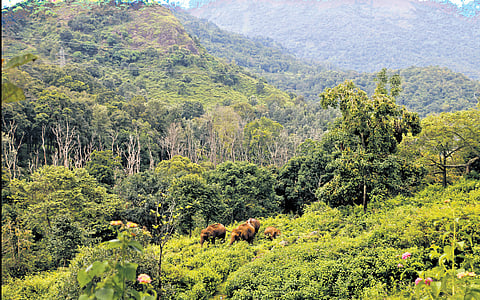

VIZAG: India ranked third globally in forest area gains, according to a recent report by the Food and Agriculture Organisation (FAO). Between 2010 and 2020, the country added 2,66,000 hectares of forest area annually. The report, released on July 22, said that China and Australia were ahead, with gains of 19,37,000 hectares and 4,46,000 hectares, respectively. The FAO report commended India’s efforts in restoring degraded lands and expanding agroforestry through new national policies.
However, this positive trend in forest cover gains was overshadowed by data on the substantial diversion of forest land for non-forestry purposes. From April 1, 2019 to March 31, 2024, as many as 8,731 projects were approved, leading to the diversion of 95,724.99 hectares of forest land. Madhya Pradesh topped the list with 22,614.74 hectares diverted, followed by Odisha with 13,621.95 hectares and Arunachal Pradesh with 8,744.78 hectares.
The India State of Forest Report (ISFR) 2021 showed a gradual increase in forest cover, with a total of 713,789 sq km accounting for 21.71% of the country’s geographical area. The top five states with the highest forest cover were Madhya Pradesh (77,493 sq km), Arunachal Pradesh (66,431 sq km), Chhattisgarh (55,717 sq km), Odisha (52,156 sq km), and Maharashtra (50,798 sq km). In contrast, the bottom five states/UTs in terms of forest cover were Lakshadweep (27 sq km), Daman & Diu (228 sq km), Chandigarh (23 sq km), Puducherry (53 sq km), and Delhi (195 sq km).
The loss of mature forests due to land diversion poses a significant environmental threat. Mature forests are crucial for biodiversity, water regulation and carbon sequestration. The replacement of old-growth forests with younger plantations cannot fully compensate for these losses, as mature ecosystems provide irreplaceable habitats and contribute significantly to carbon storage. Traditional forests are also crucial for wildlife, birds, and the ecosystem as they provide essential habitats, support biodiversity, and maintain ecological balance.
The loss of tree cover also contributes to increased carbon dioxide emissions, exacerbating climate change. Discrepancies between the ISFR data and Global Forest Watch findings, which use different methodologies for forest assessment, have added to the debate. The Ministry of Environment, Forestry, and Climate Change (MoEF&CC) has stated that there are currently no plans to amend the Forest Conservation Act (1980), despite recent amendments that drew criticism for potentially reducing protections for deemed and community forests.
While the government continues to implement compensatory afforestation programmes, concerns remain over the loss of mature forests and the environmental benefits they provide.