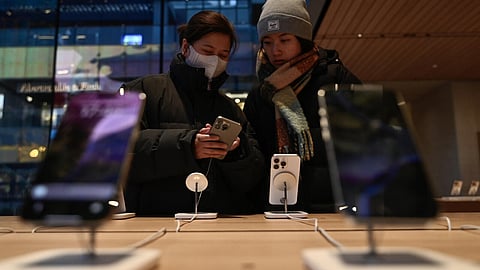

Apple remained one of the top players in India's smartphone market, increasing its value share to 23 percent during the April–June 2025 period, according to Counterpoint Research’s Monthly India Smartphone Tracker. This marks a six percent jump from Q2 2024, highlighting Apple’s growing presence in the premium segment in the country. The US tech giant solidified its position through strong sales of the iPhone 16 series, aggressive trade-in programs and attractive EMI offers.
Samsung also held a 23 percent market share by value, though this represented a slight one percent decline compared to Q2 2024. Meanwhile, Chinese brand Vivo maintained a steady 15 percent share, while Oppo dropped to 10 percent, down by one percent. Realme saw a decline to six percent in volume share (down two percent) and four percent in value share (also down two percent).
In terms of volume (units shipped), Vivo emerged as the market leader with a 20 percent share, up three percent YoY. Samsung followed with 16 percent (down one percent), and Oppo ranked third with 13 percent, marking a two percent rise. Realme and Xiaomi held 10 percent and eight percent of the volume share, respectively.
India’s overall smartphone market grew 8% YoY in volume and 18 percent YoY in value during Q2 2025, signaling a strong rebound after a muted first quarter. This recovery was powered by a 33 percent increase in new launches, aggressive promotions, and robust summer-season sales. Brands pushed discounts, easy financing, and bundled offers—especially in the mid-range and premium segments.
“India’s smartphone market recovery in Q2 2025 was further supported by an improved macroeconomic environment that boosted consumer confidence and spending. Retail inflation dropped to a six-year low, easing pressure on household budgets, while the central bank’s repo rate cuts made financing more accessible. Additionally, tax relief measures introduced earlier in the year increased disposable incomes and savings, creating a favorable setup for discretionary purchases,” said Prachir Singh, Senior Research Analyst.
Singh added that the ultra-premium segment (above ₹45,000) grew 37 percent YoY, the fastest among all price bands. This contributed to the highest-ever average selling price (ASP) for smartphones in India. Apple and Samsung led this segment, offering affordable ownership through trade-ins, no-cost EMIs, and seasonal discounts, helping more users upgrade to flagship devices.
Other Key Insights from Q2 2025:
Nothing recorded a 146 percent YoY increase in shipments, continuing its streak as the fastest-growing brand for six consecutive quarters, driven by the CMF Phone 2 Pro and broader retail expansion.
Motorola grew 86percent YoY, fueled by strong demand for its G and Edge series, along with better availability in smaller cities.
Lava led the sub-₹10,000 segment with 156 percent YoY growth, supported by competitive launches, a clean stock Android experience, and improved after-sales service.
MediaTek topped India’s smartphone chipset market with a 47 percent share, followed by Qualcomm at 31 percent, whose shipments rose 28 percent YoY.
OnePlus saw its ultra-premium segment grow 75 percent YoY, led by strong performance of the OnePlus 13, 13R, and the new 13s compact model.
Realme entered the ultra-premium segment with its GT 7 Pro Dream Edition, targeting younger buyers while expanding its offline presence to boost premium sales.
