
Reliance Industries Ltd (RIL) is set to invest ₹1.6 lakh crore (over $17 billion) to build a massive 1.5-gigawatt AI-driven data centre cluster in Visakhapatnam, Andhra Pradesh. Earlier, US technology giant Google conducted a groundbreaking ceremony for a 1 GW cluster with an investment of $15 billion in the same region. Other companies, including Digital Connexion (1 GW) and Anant Raj Cloud (about 300 MW), are also setting up facilities in the port city.
Several firms such as Sify Technologies, Nxtra by Airtel, Yotta and NTT Global are expanding data centre capacity across major Indian cities such as Mumbai, Chennai, Delhi-NCR and Hyderabad. This raises a key question: why are so many data centres coming to India?
What is a data centre?
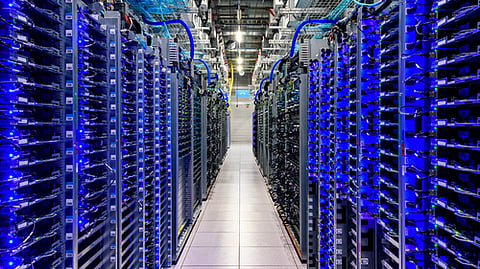
In simple terms, a data centre is a facility where technology companies such as Google, YouTube and other online platforms, including ChatGPT and chatbots, store their data. Every time we stream a movie, make a UPI payment or scroll through Instagram, we generate data that needs to be stored somewhere.
These facilities are filled with computers and storage systems that hold digital information such as websites, emails and cloud data. In essence, they act as large hubs that process and store everything people do online.
Why is it booming in India?
India’s data centre market, valued at around $10 billion in 2025, is expected to more than double to $22 billion by 2030. Between 2020 and 2024, the sector attracted investments of about $13-15 billion, with foreign institutional investors contributing nearly 80% of the total.
The growth is being driven by the rapid rise of cloud computing, artificial intelligence and other data-intensive technologies. India’s large digital base—over 800 million internet users—also makes it a key market for global tech companies.
Government rules requiring sensitive data, such as banking and health records, to be stored within India have further boosted demand. At the same time, cheap mobile data has increased consumption of video and social media content, creating a need for faster and local data storage.
Artificial intelligence (AI) requires high computing power, prompting companies like Google and Microsoft to build specialised AI-focused data centres in India. The government has also granted “Infrastructure Status” to the sector, making it easier for companies to access funding and land. The Union Budget 2026 has further extended a tax holiday until 2047 for foreign companies investing in the sector.
What are the power and water requirements?
Globally, data centre capacity stands at 40–50 GW and is expected to cross 100 GW by 2030 due to rising demand from cloud computing and AI. In India, installed capacity is projected to reach 1.7–2.0 GW by the end of 2026, backed by nearly $30 billion in investments. Deloitte estimates this could grow to 8–10 GW by 2030—a six-fold increase in just four years.
However, this rapid expansion comes with significant resource demands. Data centres require large amounts of electricity to run servers and keep them cool.
According to a report authored by public policy researcher Sagari Gupta, published in Down to Earth magazine, most data centres in India use evaporative cooling, a method suited to high-temperature environments. This process uses water to cool servers, and about 80% of the water evaporates and is lost.
At India’s current operational capacity of around 1.5 GW, this translates to roughly 37.5 billion litres of water use annually—even before the planned expansion. A September 2025 Morgan Stanley report estimates that global AI data centre water consumption could reach 1,068 billion litres annually by 2028, an eleven-fold increase from 2024 levels, depending on cooling technology and energy sources.
