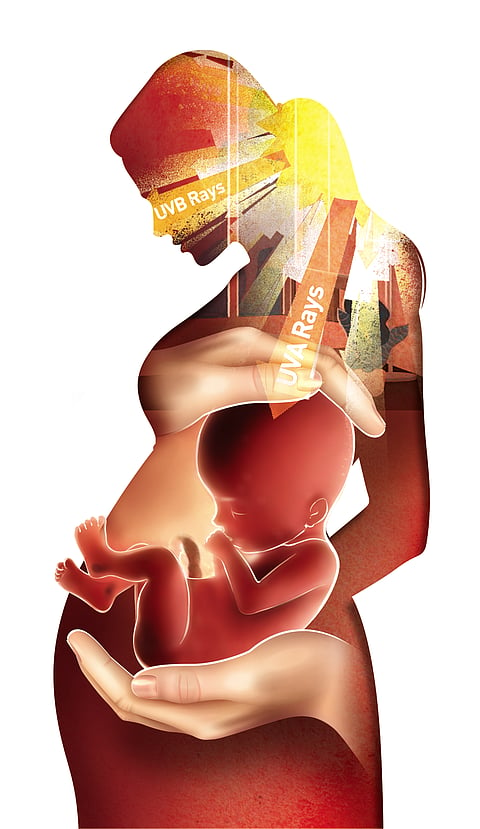

Exposure to extreme heat events poses a significant threat to human health, particularly in lower and middle-income countries like India. A new study has established a nation-wide correlation between prolonged extreme heat during pregnancy and adverse birth outcomes in India. Consecutive days of intense heat have been linked to low birth weight, preterm births, and stillbirths.
Projections indicate that extreme heat will continue to increase in both frequency and duration, which places additional strain on women, their foetuses and can lead to various health complications.
What the study reveals
Titled “Effect of Extreme Heat Stress on Adverse Pregnancy Outcomes in India,” the study was conducted by IIT Delhi in collaboration with the University of Queensland, several British universities and Korea University. Published in the peer-reviewed journal Environmental Research Communications, the research focused on the number of consecutive ‘sweltering’ days experienced by pregnant women, rather than simply examining average or peak temperatures.
The study analyzed 209,266 births recorded across 707 districts between 2015 and 2020, using data from National Family Health Survey (NFHS). Each birth was matched with local heat conditions during the mother’s pregnancy. The research indicated a negative impact of sustained exposure to extreme heat during different trimesters of pregnancy, which is associated with measurable increases in various birth risks. Specifically, prolonged heat exposure during the first trimester is linked to a higher risk of preterm birth, while the second trimester shows an increased incidence of low birth weights. Exposure to extreme heat in the final trimester is associated with a higher risk of stillbirth. Low birth weight is defined as a live baby weighing less than 2.5 kg. The study found that each additional day of extreme heat during pregnancy increases the risk of low birth weight by about 1 per cent, even after adjusting for other factors. Low birth weight was the most common adverse outcome reported, affecting 12.8 pc of births, followed by preterm birth at 1 pc and stillbirth at 0.74 pc.
How heat impacts pregnancy
Pregnancy is a critical period for both maternal and foetal health, characterized by numerous physiological changes in the mother. The metabolic processes of the foetus generate heat, which is usually dissipated through the placenta. This process causes the foetal-placental unit to demand an increase in maternal cardiac output to support the foetus. To meet this demand, maternal cardiac output rises by 30 pc to 50 pc towards the end of pregnancy, placing additional stress on the maternal cardiovascular system and affecting maternal core body temperature.
In this context, exposure to consecutive sweltering days can elevate the core temperatures of both the mother and foetus, potentially adversely affecting foetal development. Research shows that the biological effects of high ambient temperatures can lead to an increase in maternal core body temperature, which raises foetal core temperature. This can result in birth defects, while dehydration can decrease uterine blood flow and foetal growth. Reduced blood flow heightens the chance of uterine contractility, thereby increasing the risk of preterm birth.
The study also highlights that mothers with a low body mass index face a significantly higher risk of low birth weight due to heat exposure compared to mothers with a normal weight.
Different climate zones
The study found that exposure to consecutive sweltering days during pregnancy is associated with adverse outcomes across nearly all climate zones. However, mothers living in mountainous, humid subtropical and arid regions are particularly vulnerable to the effects of heat on low birth
weight. Specifically, those in mountainous regions are more affected by extreme heat due to a likely lack of adaptation to such conditions. Additionally, low birth weight is significantly associated with exposure to prolonged heat extremes in humid subtropical and arid areas.
The study also assessed social factors contributing to adverse birth outcomes. It revealed that the risk of stillbirth increases as wealth decreases, from the ‘richest’ to ‘poorest’ wealth index categories among pregnant women.
“Our data show that each additional day of extreme heat a mother endures increases the risk to her baby, with the greatest effects felt by already vulnerable women,” said Vineetha Vincent, the lead author. As heatwaves become more frequent, protecting pregnant women should be integral to India’s strategies for adapting to a warmer climate, she added.
