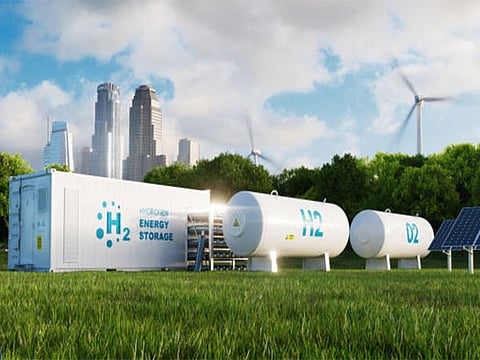

In January, Andhra Pradesh-based AM Green signed a long-term agreement with Germany’s Uniper for supply of up to 500,000 tonne of green ammonia annually by 2028. The deal gave a fresh momentum to Indian firms looking to produce and export green ammonia to Europe, Japan and South Korea.
More recently, L&T Energy GreenTech signed a long-term supply partnership with Japan’s ITOCHU Corporation, reflecting growing confidence in India’s low-cost renewable energy ecosystem.
A series of long-term agreements signed by Indian firms with European and Japanese companies has positioned India as one of the most competitive producers of green ammonia globally but stringent European Union rules defining what qualifies as “green” hydrogen now threaten to undercut India’s cost advantage and delay its entry into the lucrative European market.
The European Union is expected to significantly increase its demand for green ammonia as it seeks to decarbonize heavy industry and transportation by transitioning to green hydrogen and moving away from fossil fuels. Reports indicate that the EU could represent one-third of the global green ammonia market, making Indian companies key players in providing economical supplies.
India as global leader
India aims to produce 5 million tonne of green ammonia by 2030 through state subsidies under the National Green Hydrogen Mission (NGHM) to enhance self-reliance and reduce imports. The country has also signed agreements with local manufacturers for the production of 724 lakh metric tonne (mt) of green ammonia for domestic use. For India, ammonia is directly connected to country’s food production as it is main ingredient for producing the fertilizer Di Ammonium Phosphate (DAP) which got disrupted due to Iran war.
Currently, over 70 per cent of the approximately 30 million mt of ammonia required in India is imported, primarily in the form of grey ammonia sourced from fossil fuels like natural gas. Major suppliers include Oman, Saudi Arabia, Qatar and Bahrain but recent geopolitical events, particularly the West Asia crisis, have interrupted supply routes through the Strait of Hormuz. The production process of grey ammonia is highly carbon intensive. For every tonne of ammonia produced, about 1.9–2.6 tonne of CO₂ is emitted. Currently, India emits approximately 25 to 43 million tonne of CO₂ per year in the production of grey ammonia that accounts for about 5-10 per cent of global carbon emissions of around 450 million tonne of CO₂ each year. In terms of the overall picture, this represents roughly 1.2 to 1.8 per cent of total global greenhouse gas emissions. Under the Paris Agreement, India is required to lower its emissions by transitioning to green ammonia which involves using electrolyzers and renewable hydrogen.
However, to access the EU market, Indian companies must comply with the stringent Renewable Fuels of Non-Biological Origin (RFNBO) regulations. A senior government official indicated that while India’s policies are suitable towards the domestic market but compliance with RFNBO is necessary for accessing EU markets. He noted that the strictness of EU regulations may deter long-term investment in the sector but expressed hope that PM Modi’s visit to EU countries this month could address these challenges.
EU rules may derail India’s ambition
On January 27, the EU and India concluded a significant Free Trade Agreement, referred to as the ‘mother of all deals.’ Despite this, the EU will apply the Carbon Border Adjustment Mechanism (CBAM) to ammonia imports based on their CO2 intensity, with green ammonia, characterized by zero CO2 emissions, exempt from the tariff.
However, India faces structural challenges that hinder the development and export of green ammonia to the EU. EU Delegated Acts 2023/1184 and 2023/1185, adopted in 2023, established stringent criteria for classifying ‘green’ hydrogen,’ which must be produced from renewable fuels of RFNBOs. The regulations introduce three key requirements: additionality, temporal correlation and geographical correlation.
The additionality rule mandates that hydrogen production must either use or create new renewable electricity capacity rather than diverting from existing sources. This means a green hydrogen facility must operate on its own renewable energy supply, and plants must be active for 36 months before production begins. For example, if a renewable grid is set up in 2026, green hydrogen production cannot commence until 2029. India asserts that its vast renewable energy capacity can meet these requirements. However, the temporal correlation rule, often referred to as the ‘sunset clause,’ implies that renewable energy used for hydrogen production must be generated and consumed simultaneously. Indian experts argue that this is impractical, as consistent renewable energy supply is necessary for economic viability. As Sanjay Sharma, director of SECI, points out, categorising stored renewable energy as ‘non-green’ after certain hours undermines the potential of battery storage. The geographical correlation rule specifies that the RE source and hydrogen production must ideally be within the same electric market area, referred to as a single bidding zone. Critics argue this regulation is EU-centric, as the EU consists of 27 member states with differing bidding zones, while India operates on a unified grid system. Sharma notes that in India, power can be transmitted seamlessly across states without loss.
Currently, India’s grid comprises over 0.47 million km of transmission lines (220 KV and above) with a transformation capacity of 1.3 mega volt-amperes, boasting of a transmission availability of 99.84 per cent and minimal congestion (0.02 pc) in 2023-24.
Emerging dissent voice in EU
The strict rules of EU are not just creating challenges to India but even prominent members of EU have also raised the concern related to ‘practicality’ of the implementation amid energy crisis. An internal report indicated that senior government officials from Germany, Spain, the Netherlands, Poland and Austria have called for specific revisions to the EU’s RFNBO rules in a joint letter to the European Commission, claiming that the Delegated Act setting out the regulations ‘does not align with the economic realities of the hydrogen market development in the EU and worldwide.’ A senior Indian officer close to the development said France government has also conveyed to European Commission to change the rule in face of practicality.
(This article is part of the India–Germany Climate and Energy Journalism Programme by Clean Energy Wire and The Migration Story. The author acknowledges his journalistic partner in Germany, Stephen B Harrison.)
