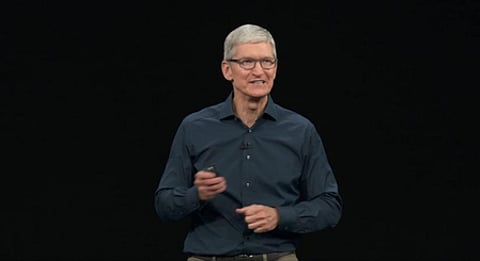

Tim Cook has stepped down as Apple’s chief executive after 15 years at the helm, with John Ternus taking over as the company’s new CEO from September 1. When Cook became Apple’s chief executive in 2011, the company was still closely associated with the technological vision of Steve Jobs. Fifteen years later, he leaves behind an Apple that is larger, more diversified and has greater control over the technologies used in its products.
Why is Apple Silicon important?
One of the biggest technological changes during Cook’s tenure is Apple Silicon — Apple’s decision to replace Intel processors in its Mac computers with chips designed in-house. Apple announced the transition in June 2020 and launched its first M1-powered Macs later that year. The move was important because it gave Apple greater control over the processors used in its computers and allowed the company to better integrate hardware and software. The M1 showed the potential of this strategy by offering strong performance along with better power efficiency. Apple later expanded the M-series family with more powerful chips and used them across MacBooks, desktop Macs and professional systems. The transition from Intel-based Macs to Apple Silicon was completed in 2023.
What else did Cook bring to Apple?
Cook’s tenure has also seen several important additions to Apple’s product portfolio. The Apple Watch established the company as a major force in wearable technology, while AirPods helped popularise truly wireless earphones. Face ID brought three-dimensional facial recognition to the iPhone, while Apple later entered spatial computing with the Vision Pro headset.
However, not every Cook-era technology has achieved mass-market success. Vision Pro, introduced in 2024, was an ambitious attempt to establish a new computing category. But its high price and niche positioning limited its reach compared with products such as the iPhone and Apple Watch.
