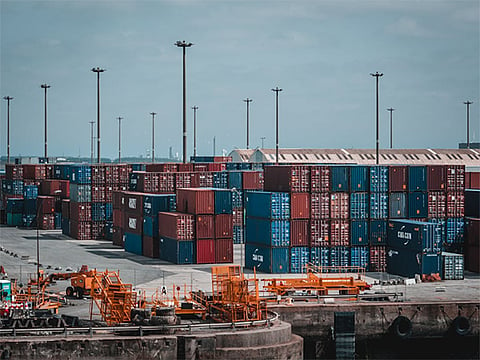

CHENNAI: China has closed 2025 with an extraordinary trade performance, reporting a record surplus of around one trillion dollars even as renewed tariff pressure from the US sought to curb its export machine. The milestone underscores the resilience of China’s manufacturing and export model and highlights how global trade flows are being reshaped in an era of intensifying economic rivalry.
This was largest trade surplus ever recorded by any country, with the gap between exports and imports reaching $1.19 trillion. This marked the first time China’s full-year trade surplus crossed the $1 trillion threshold, surpassing the previous record of $993 billion set in 2024, said a Wednesday report by BBC.
China’s monthly export surpluses exceeded $100 billion on seven occasions during the year, underscoring how the renewed tariff push under President Trump has done little to dent the country’s overall trade performance with the rest of the world, BBC reported.
Despite higher tariffs imposed by the US under President Donald Trump, China’s overall exports continued to expand through the year, driven by strong demand from markets outside North America. Shipments to the US fell sharply, but this was more than offset by rising sales to Southeast Asia, the European Union, Latin America, Africa and the Middle East.
Chinese exporters, faced with a more hostile US trade environment, accelerated their pivot to alternative markets and deepened their integration into regional and emerging economy supply chains.
Exports for the year grew steadily, while imports rose at a much more moderate pace, leaving China with its largest trade gap on record. This reflects not only the strength of its export sector but also the relative weakness of domestic demand. Chinese households and businesses have remained cautious amid a prolonged property sector downturn and slower income growth, limiting the appetite for foreign goods and contributing to the widening surplus.
A key driver of China’s export strength has been its dominance in advanced manufacturing and technology-linked sectors. Shipments of electric vehicles, batteries, machinery, electronics and industrial components have surged as Chinese firms consolidate their position in global value chains. The country has also become a major supplier of intermediate goods that feed into manufacturing networks across Asia and beyond, making its exports harder to displace even when tariffs rise in specific markets.
The record surplus carries significant geopolitical and economic implications. For Washington, the data highlights the limits of tariffs as a tool to rebalance trade when a major exporter can reroute goods and find new buyers. While US-bound shipments declined, China’s ability to diversify its customer base meant that the overall impact on its external accounts was limited. For other trading partners, however, China’s expanding surplus has raised concerns about competitive pressures on domestic industries and the risk of growing global imbalances.
From Beijing’s perspective, the figures are being presented as evidence of the competitiveness and adaptability of its economy in the face of external pressure. Officials have pointed to the breadth of China’s trading relationships and its increasingly sophisticated export mix as proof that the country can withstand attempts to isolate or constrain it through trade policy.
At the same time, the numbers expose a deeper structural challenge. A trade surplus of this magnitude reflects an economy that remains heavily dependent on external demand at a time when many global markets are slowing. Weak domestic consumption means that imports have not kept pace with exports, making China more vulnerable to swings in global growth and to political pushback from trading partners who see the imbalance as destabilising.
Looking ahead, China is likely to continue leveraging its manufacturing scale and expanding network of trade ties to sustain export growth, even as tensions with the United States and other advanced economies persist. However, the durability of this model will depend on whether Beijing can revive domestic demand and move towards a more balanced growth pattern. For the global economy, China’s trillion-dollar trade surplus is a powerful reminder that trade, geopolitics and industrial strategy are now deeply intertwined, and that economic confrontation is becoming a defining feature of the international order.
