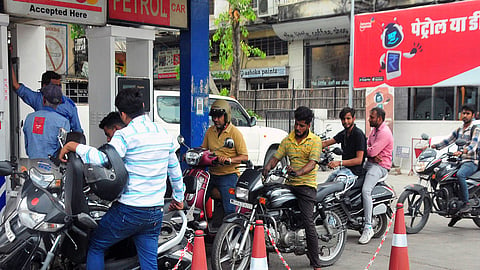

Crisil in a report, highlighted that the rise in petrol and diesel fares is likely to add fresh inflationary pressures to India's economy as increased transport and manufacturing costs are expected to feed through to consumer prices in the months to come.
Petrol and diesel prices have increased by about Rs 7.5 per litre since May 15, and further increases remain likely if global crude oil prices stay elevated.
"With oil marketing companies gradually paring their losses (or under-recoveries), cumulative hikes could move closer to Rs 10 per litre in the near term," the rating agency said.
"The broader effect will reverberate across the economy through higher transport costs, pushing up both food and core inflation."
The direct impact of higher fuel prices on Consumer Price Index (CPI) inflation is estimated at around 36 basis points for a Rs 7.5-per-litre increase in petrol and diesel prices, rising to nearly 48 basis points if cumulative hikes reach Rs 10 per litre.
Beyond the immediate effect, Crisil warned that fuel inflation could spread more broadly through the economy via higher freight and logistics costs.
Road transport, which accounts for roughly 71 per cent of India's freight movement, is particularly exposed, with fuel representing about 42 per cent of operating costs.
"The increase in retail fuel prices will directly impact these freight cost structures and feed into prices across supply chains in the coming months," it said.
The increase in transport costs is expected to have the strongest impact on food categories that rely heavily on logistics networks, including dairy products, tea, coffee, fruits, pulses, spices, eggs, meat and fish.
Combined with a favourable base effect fading, this could accelerate food inflation in the coming quarters.
Crisil said core inflation could also face renewed pressure as manufacturers contend with rising costs for crude oil, petroleum products and natural gas, alongside higher transportation expenses.
Sectors such as clothing, consumer electronics, wood products and construction materials, including cement and ceramics, are among the most transport-intensive and could see stronger price pass-through.
Manufacturers of chemicals, coal and metal-related products may also face higher input costs.
With demand conditions remaining relatively stable, companies are increasingly likely to pass on these costs to consumers or resort to shrinkflation strategies to protect margins.
Some of the inflationary impact could be offset by goods and services tax (GST) reductions announced in September 2025, which lowered tax rates on several mass-consumption categories, including electronics, automobiles, clothing, processed foods and fast-moving consumer goods.
The tax cuts are expected to continue exerting downward pressure on prices over the next year, though analysts say they are unlikely to fully neutralise the impact of elevated energy costs.
Crude oil prices have averaged about USD 112 a barrel during the first two months of the current fiscal year, significantly above a base-case forecast of around USD 95 a barrel for the full year.
While headline inflation remains below the Reserve Bank of India's 4 per cent target, Crisil expect it to trend higher, though still remain within the central bank's 2-6 per cent tolerance band.
The Reserve Bank of India is expected to look through the initial supply-side impact of higher fuel prices.
However, policymakers are likely to closely monitor risks to household inflation expectations and the possibility that rising transport and input costs trigger broader-based price increases across the economy.
The central bank will also be watching weather-related risks, including forecasts for a below-normal monsoon and evolving El Nino conditions, which could further complicate the outlook for food inflation, the report added.
With inputs from PTI
