
CHENNAI: India’s textile industry is facing fresh geopolitical headwinds after Israel and the US launched air strikes on Iran two days ago. India exports textile and apparel products worth nearly Rs 5,000 crore to the UAE alone and another Rs 1,500 crore to other parts of West Asia. Tiruppur accounts for shipments of around Rs 450–500 crore per month to West Asian countries.
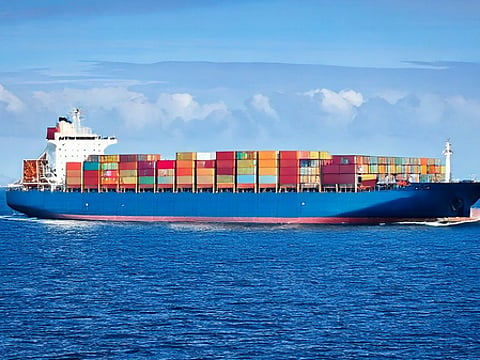
The conflict has disrupted trade flows, with vessels remaining anchored at ports over the past two days. Exporters are still assessing the overall losses.
Ashish Gujarati, past president of the South Gujarat Chamber of Commerce & Industry, said, “We are still assessing the impact of the war that broke out in West Asia. West Asia is a major choke point for global trade. With this war, crude prices will shoot up drastically, making it non-feasible for the textile industry and triggering a surge in overall inflation. With crude prices rising, other raw material prices will also increase.”
He added that the closure of airspace in Qatar and Kuwait has pushed up airfares substantially. “We export narrow fabric to Iran. This supply has been affected due to the war,” he said.
One of the worst-affected segments is likely to be polyester yarn. Oil is the primary raw material for polyester yarn, derived from petroleum-based hydrocarbons such as para-xylene. These are processed into purified terephthalic acid (PTA) and ethylene glycol, which are polymerised under high heat to create polyester polymer that is spun into yarn. For one kg of yarn, nearly 85% to 90% of the input is PTA.
Haresh Calcuttawala, founder and CEO of Trezix, said, “This will have a compounded effect on exports to Africa, Europe, Canada and North America. More than 40% of our trade is routed through West Asia. The foreign exchange rate may rise to Rs 110 per dollar, putting pressure on forex reserves. We may see trade volatility of 15–20% in the near future.”
The UAE is among the largest markets for Indian textile and apparel exporters in West Asia. In 2024, it was the fourth-largest market for India’s textile and apparel exports after the US, the EU and Bangladesh.
Shipping companies have also raised freight charges sharply. Some have increased rates by $1,500 to $2,000 per container from the earlier $200–$250 range. Maersk has reportedly increased rates by nearly $1,700 per container to West Asia and beyond, while CMA CGM has raised rates by $2,000 to $3,000 per container.
Tiruppur exports nearly 13–14% of its textile and apparel products to West Asia. “My buyers in West Asia are in a perplexed condition. We don’t know what is happening now. My shipment worth Rs 2 crore has been delayed at Thoothukudi port. Port officials are seeking time to let the consignment sail,” said Raja Shanmugham, past president of the Tiruppur Exporters’ Association.
A Sakthivel, chairman of the Apparel Export Promotion Council, has urged the government to waive demurrage charges on export cargo in view of flight disruptions arising from the ongoing West Asia crisis.
“Considering the narrow margins under which textile and apparel exporters operate, any escalation in logistics and insurance costs due to the West Asia scenario puts them in a very tight spot. It affects their ability to meet contractual obligations and significantly raises operating costs,” said CITI chairman Ashwin Chandran.
