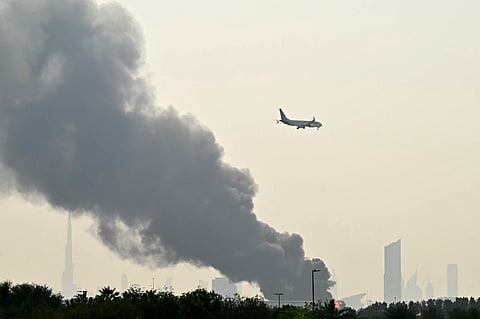

MUMBAI: Describing the ongoing war in West Asia as the worst crisis in the last 50 years not only for the region but also for the tens of millions of migrants—Indians alone number 10 million—migration expert S Irudaya Rajan said its ripple effects have begun to dent the image of Gulf countries as a safe haven for migrants.
The whole of West Asia directly and the rest of the world indirectly have been hit after the US and Israel bombed Iran and killed its supreme leader Ayatollah Ali Khamenei and his top military and political leadership along with most of his family members. As the war entered the third week, with no sign of an end to the raging conflict, crude is in short supply across the world, with prices having shot up by almost 46%.
Rajan is the chair of the International Institute for Migration & Development, a Thiruvananthapuram-based think-tank, and also the chair of the Knomada (The Global Knowledge Partnership on Migration & Development), which is a World Bank working group on internal migration and urbanization. Earlier, he headed another think-tank, the Centre for Development Studies, again based in Thiruvananthapuram.
What’s more, this is for the first time that the whole region is at war, unlike in the past. None of the previous conflicts including the eight-year (1980-88) Iran-Iraq war, the 1990-91 Iraq-Kuwait war, the 2003 US war on Iraq to capture Saddam Hussein or the Israel-Hamas war engulfed the entire region, he says.
The six-nation Gulf Cooperation Council (GCC) comprising Bahrain, Kuwait, Oman, Qatar, Saudi Arabia, and the United Arab Emirates are all at war now along with Iran, Israel and Lebanon. The GCC countries alone are home to as many as 10 million Indian migrants, and a fifth them are from Kerala alone. And that makes the current war all the more serious, he says.
There are 2.2 million migrants from Kerala according to the Kerala Migration Survey, 2023. Of that, as much as 90% are in the Gulf. So, you have close to 2 million Keralites in the Gulf. This means that 1 out of 5 of the 10 million Indians in the Gulf region is a Malayalee and 90% of them are in the GCC.
“The current crisis is the worst that migrants have faced in the last 50 years. This kind of psychological fear was never created in the Gulf before. The image of the Gulf as a safe haven is being questioned now,” Rajan told TNIE from Thiruvananthapuram.
For example, on Monday a Dubai-bound Emirates flight from Chennai had only 35 people on board. "The current crisis will have both short- and long-term impacts. If the crisis continues for another 20 days, the scenario will be different. So, everything depends on how long the war lasts and nobody knows the answer," Rajan averred.
On the impact of the war on the Gulf economies, he says, “The Gulf economy is managed by migrants. And when the migrants go back, their economies will be hit hard. While their economy is dependent on migrants, our economy depends on their money. On the positive side, when the war ends, there will be a very huge migration to the Gulf. And they need migrants to bring their economy back on track, and rebuild.”
When asked about the impact of the ongoing war on remittances—India has been the largest recipient of remittances, which crossed $135.5 billion in FY25 of which around $28 billion flew into Kerala alone, making the state the second largest inward destination after Maharashtra—Rajan said, “As of now, no alarm bells are being heard but if the war lasts longer, definitely it will cripple the state as Kerala is heavily dependent on remittances."
He said, “But what I can say with certainty that this war will have much worse impact than Covid, or even the global financial crisis of 2007-08, on migrants and their families and thus the states that receive high amounts of remittances.”
Of the Rs 2 trillion that Kerala got last fiscal, if there is even a 20% decline, that’s Rs 50,000 crore. And for a heavily remittance-dependent Kerala households, this will be beyond their capacity to cope, because when remittances fall, the entire economy is in trouble, Rajan said.
Arguing that the aura of peace, stability and safety that most GCC countries offered so far no longer exists as the whole region is at war, he said that golden visas, tax-free incomes and changes in property ownership will not have the same appeal as before.
He urged all states with large number of its people in the Gulf to immediately assess the impact of the crisis and take some concrete steps to alleviate the impact on a war footing.
