
THE monsoon brings relief from the summer heat, but it also creates ideal conditions for the growth of disease-causing microbes. Increased humidity and moisture create an environment that serves as a breeding ground for bacteria, fungi, and viruses. This often leads to a rise in foodborne illnesses such as diarrhoea, dysentery, cholera, and food poisoning caused by E. coli and Salmonella. According to the Food Safety and Standards Authority of India (FSSAI), the risk of food-related diseases increases significantly during this time of year. Hence, maintaining food safety and personal hygiene is crucial to protect our health during the rains.
Wash before you eat
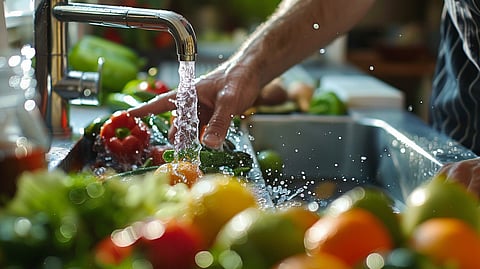
Always wash fruits, vegetables, and meat with clean, potable water before use. Avoid consuming cut fruits that have been left uncovered, as moisture encourages bacterial and fungal growth. Eat freshly cut fruits and prepare juices only when you are ready to consume them. After washing, dry fruits properly and store them in paper bags or separate refrigerator compartments to prevent spoilage.
Eat safe, fresh, and hygienic food
Avoid street food, pre-cut fruits, and ready-to-eat fried or junk foods during the monsoon. Street foods are often prepared in unhygienic, open environments where rainwater and drainage contamination are common. Opt for freshly prepared home-cooked meals. Bakery products also tend to spoil faster in humid conditions, so consume them soon after opening the pack.
Keep the kitchen clean
A clean kitchen is the foundation of food safety. Sanitise countertops, cooking equipment, and utensils before and after food preparation. Use hot water and disinfectant to clean kitchen surfaces and floors. Washing utensils thoroughly and drying them before storage prevents microbial growth.
Maintain refrigerator hygiene
A clean refrigerator is essential to prevent food contamination. Defrost and clean your refrigerator every two weeks to remove odour and sticky residues. Avoid overloading, as proper air circulation keeps food fresh for longer. Store fruits and vegetables separately in clean paper bags or containers. Keep raw meat and eggs away from cooked food to prevent cross-contamination.
Practice personal hygiene
Personal hygiene directly affects food safety. Wash hands thoroughly with soap and water before and after handling food. Keep nails trimmed and hair tied while cooking. Avoid using phones or gadgets in the kitchen. Always drink boiled or filtered water during the monsoon to reduce the risk of waterborne infections. Wearing clean cotton clothes or aprons while cooking also helps maintain hygiene.
Cook food thoroughly
Ensure that all food, especially meat and seafood, is cooked well. Use clean water for cooking and avoid reheating food multiple times. Cook in small quantities and eat fresh to minimise the risk of food spoilage. Wash green leafy vegetables in salt water to remove dirt and microorganisms. Avoid consuming raw salads during this season, steam or lightly cook them instead.
Handle leftovers safely
Store leftovers in clean, covered containers and refrigerate them promptly. Reheat thoroughly before consumption. Perishable foods like milk, curd, and meat should always be refrigerated. Remember that damp and warm conditions can quickly turn cooked food into a breeding ground for moulds and bacteria.
Storing raw ingredients
Moisture is the biggest enemy of food safety during the monsoon. Store grains, pulses, and spices in airtight containers in a dry area. Avoid buying groceries in bulk as they may spoil faster in humid conditions.
Monsoon is a time to enjoy comforting homemade meals, but it also demands extra caution. Clean ingredients, proper storage, safe cooking, and personal hygiene are key to preventing foodborne illnesses. By following these simple food safety measures, you can enjoy a healthy, infection-free monsoon season while keeping your nutrition intact.
