
NEW DELHI: At the INDIA bloc rally, the Opposition used soft power in their political messaging to influence, connect and mobilise people through culture, shared values and emotional appeal.
From Himachali folk music and traditional dances to patriotic Bollywood songs, protesters at Ramlila Maidan turned the demonstration into a vibrant display of cultural identity, highlighting how art has long served as a powerful language of resistance.
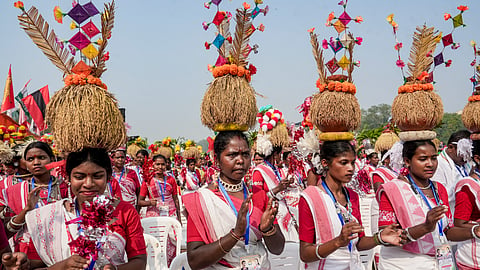
Beyond slogans, speeches and party flags, protesters brought with them something equally expressive—their cultural heritage. People from different states came together in their traditional attire, showcasing India's rich cultural diversity and regional identities through vibrant clothing, folk traditions and expressions of collective solidarity.
Some protesters sang and danced to patriotic Bollywood songs, while others gathered beneath a large canopy in the colours of the tricolour.
Members of diverse tribal communities from across the country gathered at nearby Connaught Place to present traditional folk dances. Not just traditional dances and indigenous musical instruments, people dressed-up as freedom fighters.
People dressed up as lookalikes of Bhagat Singh, Mahatma Gandhi, and Netaji were a common sight, the most prominent being BR Ambedkar. Some participants wore masks depicting Prime Minister Narendra Modi, adorned with garlands of chillies. A group of sadhus too joined the protest with chants.
There were large graffitis made on the roads with slogans against the alleged “vote chori” as the rally moved from Minto Road, Jawaharlal Nehru Marg, towards the Ramlila Ground. Creative expressions found new forms.
A 21-year-old demonstrator dressed as a cockroach to symbolically highlight the alleged deletion of citizens' names from electoral rolls, portraying voters as being casually brushed aside. A group of people dressed as an angulimal baba from the legends of Gautam Buddha saying that "he had stopped at 999, but the CEC doesn’t seem to stop even after chopping 13 crore votes."
A Congress state unit displayed a one-mile-long cloth banner bearing the names of voters allegedly deleted from the electoral rolls, with at least 20 party workers carrying it in a straight line as they marched towards the venue.
The use of art as a medium of protest is hardly new. Across centuries and continents, music, poetry, theatre, paintings and dance have helped people challenge authority, express dissent and mobilise collective consciousness.
In India, the relationship between art and resistance has deep historical roots. During the freedom struggle, art became an important tool for spreading nationalist ideas and bringing people together.
Patriotic compositions such as Vande Mataram and Sare Jahan Se Achha became more than musical works; they evolved into expressions of collective aspiration and resistance to colonial rule. Songs, poems, nukkad natak or street performances and folk dances on Sunday reiterated that messaging.
The leader of the opposition had said multiple times that the rally is "shiv ki baraat", highlighting the fact that "it’s time for tandav". According to scriptures, tandav is synonymous with rage and the restoration of balance.
The imagery sought to frame the protest as an expression of collective resentment against what the Opposition has described as discrepancies in the voter-list revision process. Visuals from the demonstration on Sunday brought those cultural narratives into a larger public conversation.
