
SRINAGAR: Iran’s loss has turned out to be Kashmir’s gain. The ongoing crisis in West Asia, coupled with a sharp decline in saffron output from Iran has resulted in the demand for Kashmiri saffron.
According to Jammu & Kashmir Saffron Growers Association president Abdul Majeed Wani, the demand for Kashmir saffron has witnessed a noticeable rise this year due to the West Asia crisis.
According to Majeed, Iran has experienced a decline of 140 tons of saffron production this year.
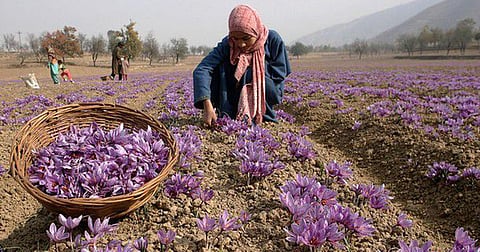
Saffron, often called “red gold” for its distinctive aroma, flavour, and natural colouring properties, is primarily cultivated in Pampore and nearby regions of South Kashmir.
The saffron plant produces purple flowers with bright orange to red stigmas, which are carefully dried to obtain the highly valued spice. Its cultivation requires specific climatic conditions, which is why it remains largely limited to select areas of Pulwama district.
Over the years, saffron production in the Kashmir Valley has witnessed a notable decline, dropping from 23.53 metric tonnes in 2023–24 to 19.58 metric tonnes in 2024–25, according to official data.
Growers attribute the fall in output to changing climate conditions and inadequate irrigation infrastructure. They say the crop requires multiple spells of rainfall between August and the harvesting period in late November, and recent rainfall deficits have adversely impacted yields.
“It needs many spells of rainfall from August till its harvest in November end,” growers said, pointing to prolonged dry spells as a key concern.
According to traders, saffron that earlier sold at around Rs 250 per gram and Rs 2.5 lakh per kilogram is now being priced at approximately Rs 350 per gram and between Rs 3.20 lakh and Rs 3.70 lakh per kilogram.
“The demand for Kashmir saffron has gone up noticeably this year. The prices have improved compared to previous seasons,” a grower said, expressing optimism that the upward trend may continue.
Export demand has also strengthened, with Kashmir saffron being shipped to markets in the United Arab Emirates, the United States, the United Kingdom, and other destinations. Traders say shifting geopolitical and trade conditions involving Iran may further increase demand for Kashmiri produce in Gulf markets.
Currently, about 3,700 hectares of land in Jammu and Kashmir is under saffron cultivation. The harvest season runs from October 15 to November 20, during which saffron flowers are hand-plucked three times over the flowering period.
