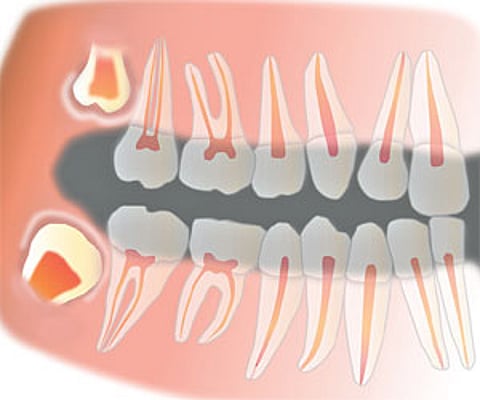

WISDOM teeth are the last adult teeth to appear. They are usually called the third molars. There are four of them right at the back of your mouth. But sometimes they don’t come through the gum properly.
This usually happens when there isn’t enough space, or when the teeth are growing in the wrong direction. It is because, by the time the tooth comes, most of the space in the mouth is usually taken up by other teeth and the wisdom tooth doesn’t fit. When this happens, they’re called impacted wisdom teeth.
IMPACTED WISDOM TOOTH
Symptoms: Sometimes, you may never experience problems with your wisdom teeth.
They may emerge normally and be troublefree.
But at most times, they do not erupt properly. There are some common signs and symptoms of impacted wisdom teeth. These include:
■ Pain or tenderness around your gums
■ Swelling around your jaw
■ Red or swollen gums around the impacted tooth
■ Jaw pain
■ Bad breath
■ Unpleasant taste when biting down on or near the area
■ Prolonged headache or jaw ache When any of these problems occurs, it is very important to have your wisdom tooth removed. If the infection is left untreated it can continue around the wisdom tooth and cause facial swelling that can prevent the patient’s mouth from opening.
SURGICAL REMOVAL
The impacted wisdom teeth cannot be removed like a normal tooth due to its location and position and should be surgically removed.
Wisdom tooth surgery can be done under local anaesthesia or general anaesthesia.
In local anaesthesia, the surgeon will administer local anaesthetic and proceed with the surgery once the surgical site is numb. An incision will be made at the surgical site and bone and tooth exposed. Bone may need to be removed in some cases to enable the wisdom tooth to be elevated and the wisdom tooth may also need to be sectioned or cut to facilitate the removal.
Immediately Following Surgery
■ The gauze pad placed over the surgical area should be kept in place for a half hour. After this time, the gauze pad should be removed and discarded.
■ Vigorous mouth rinsing or touching the wound area following surgery should be avoided. This may initiate bleeding by causing the blood clot that has formed to become dislodged.
■ Take the prescribed pain medications as soon as you begin to feel discomfort.
This will usually coincide with the local anesthetic becoming diminished.
■ Restrict your activities the day of surgery and resume normal activity when you feel comfortable.
■ Place ice packs to the sides of your face where surgery was performed. Refer to the section on swelling for explanation.
This article was composed by
DR.A.V.Arun,
THE SMILE CENTER A-29/1, 2ND MAIN ROAD,
ANNA NAGAR EAST BEHIND WORLD OF TITAN CHENNAI 600102.
MOB 9884042526