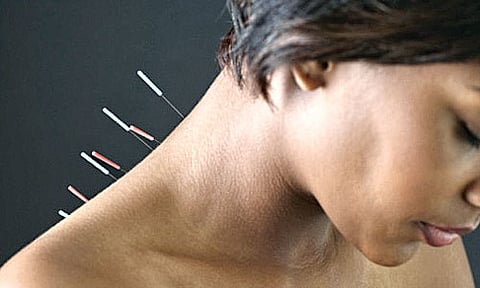

Over its 2,500 years of development, a wealth of experience has accumulated in the practice of acupuncture, attesting to the wide range of diseases and conditions that can be effectively treated with this approach. Acupuncture has been used throughout the world, particularly since the 1970s. The various conditions in which acupuncture has been found to be very effective includes:
Locomotor system: Chronically painful conditions of the locomotor system accompanied by restricted movements of the joints are often treated with acupuncture if surgical intervention is not necessary. Acupuncture not only alleviates pain, it also reduces muscle spasm, thereby increasing mobility. Joint damage often results from muscle malfunction, and many patients complain of arthralgia before any changes are demonstrable by X-ray. In these cases, acupuncture may bring about a permanent cure. Controlled studies on common diseases and conditions in this category have been reported by different authors, with favourable results for acupuncture treatments compared with standard therapy. The conditions concerned include cervical spondylitis, or neck pain due to other causes, periarthritis of the shoulder, fibromyalgia, fasciitis, epicondylitis (tennis elbow), low back pain, sciatica, osteoarthritis with knee pain and radicular and pseudoradicular pain syndromes.
Acupuncture is beneficial in the treatment of rheumatoid arthritis while acupuncture may not improve the damage that has been done to the joints, successful pain relief has been verified in the majority of controlled studies. The action of acupuncture on inflammation and the dysfunctional immune system is also beneficial.
Gout: In a randomised controlled trial, acupuncture was compared with conventional medication. The acupuncture group showed greater improvement than the allopurinol group. A similar reduction of uric acid levels in the blood and urine of both groups was noted. Plum-blossom needling, together with cupping, has been recommended for treating gouty arthritis.
Biliary and renal colic: Acupuncture is suitable for treating acute pain, provided the relief of pain will not mask the correct diagnosis, for which other treatments may be needed. Biliary and renal colic are two conditions for which acupuncture can be used not only as an analgesic but also as an antispasmodic. In controlled studies on biliary colic and renal colic, acupuncture appears to have advantages over conventional drug treatments. It provides a better analgesic effect in a shorter time, without side effects. In addition, acupuncture is effective for relieving abdominal colic, whether it occurs in acute gastroenteritis or is due to gastrointestinal spasm.
Traumatic or postoperative pain: For traumas such as sprains, acupuncture is not only useful for relieving pain without the risk of drug dependence, but may also hasten recovery by improving local circulation. Acupuncture analgesia to relieve postoperative pain is well recognised and has been confirmed in controlled studies. The first successful operation under acupuncture analgesia was tonsillectomy. This was, in fact, inspired by the success of acupuncture in relieving post-tonsillectomy pain.
Dentistry: There are reports of randomised controlled trials on the analgesic effect of acupuncture for postoperative pain from various dental procedures, including tooth extraction, pulp devitalisation, and acute apical periodontitis. According to a systematic review of papers on the use of acupuncture in dentistry, 11 of 15 randomised controlled studies with blind controls, appropriate statistics and sufficient follow-up showed standard acupuncture to be more effective than a placebo or sham acupuncture.
Childbirth: In childbirth, acupuncture analgesia is useful for relieving labour pain and can significantly reduce the duration of labour. In the case of weakened uterine contractions, acupuncture increases the activity of the uterus. Episiotomy and subsequent suturing of the perineum can also be carried out with acupuncture analgesia. In addition, the avoidance of narcotics is advantageous for newborn infants.
Respiratory disorders: Acupuncture is often used in treating respiratory disorders. Allergic rhinitis is one of the major indications. In controlled studies, it has been shown that acupuncture is more effective than antihistamine drugs in the treatment of allergic rhinitis. Acupuncture’s lack of side-effects is a distinct advantage in treating this condition.
The acute symptoms of tonsillitis can be effectively relieved with acupuncture. For sore throats from other causes, acupuncture treatment provides definite benefits, in contrast to a placebo and acupuncture refusal. In treating bronchial asthma with acupuncture, reports suggest that acupuncture is effective. Acupuncture may also provide symptomatic improvement in the late stages of bronchial asthma, where there are complications of disabling breathlessness due to impaired lung function.