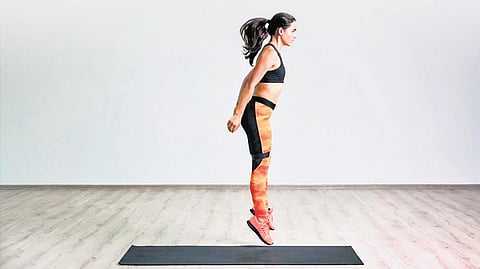

From fibermaxxing to dopamine menus, social media has turned wellness into a buffet of bite-sized trends. The latest to go viral? Lymphatic jumping. No supplements. No sweat-drenched workouts. Just gentle, rhythmic bouncing. Yet behind the playful hops lies a serious physiological logic.
The lymphatic system is the body’s silent sanitation crew. It drains excess fluid, ferries immune cells, and clears metabolic waste from tissues. Unlike blood, lymph doesn’t have a heart to pump it around. Its movement depends on muscle contractions, breathing, posture, and gravity. Long hours of sitting, scrolling, or sedentary work can slow this flow, leaving people feeling heavy, puffy, or drained. That’s where lymphatic jumping enters—light, vertical movements that act like a manual pump for lymph.
What exactly is lymphatic jumping? Think soft toe bounces, gentle hops, or rebounding on a mini trampoline. The movement is subtle, almost meditative. As the body rises and falls, pressure changes ripple through tissues, nudging lymph fluid through its channels.
The real stress here is on the calf muscles, often called the body’s “second heart.” Each bounce contracts and releases them, helping push lymph upward against gravity. The repeated press-and-release also supports the lymph vessels’ one-way valves, reducing stagnation that can contribute to bloating and swelling. “You’re not jumping for height—you’re jumping for rhythm,” says fitness trainer Aditi Malhotra. “The lymphatic system responds best to consistency and gentleness, not intensity.”
Lymphatic jumping isn’t about dramatic transformation—it’s about subtle shifts that add up. People often report feeling lighter, more energised, and less stiff, especially when the practice is paired with deep breathing. Rohan, a 34-year-old product manager from Delhi, started doing two minutes of toe bouncing every morning between meetings. “I was skeptical,” he admits. “But after a few weeks, my afternoon sluggishness reduced and my legs didn’t feel as heavy by evening. It’s now my reset button.”
Another advantage? Accessibility. No gym, no equipment (unless you enjoy a rebounder), and no outfit change required. “It’s one of the easiest ways to reintroduce movement into a sedentary day,” notes strength and mobility coach Kunal Verma. “For many clients, it’s a gateway habit—once they move a little, they’re more likely to move more.”
Despite the hype, lymphatic jumping isn’t a miracle cleanse. The liver, kidneys, and lungs already handle detoxification efficiently. Jumping doesn’t replace them. Done mindfully and in moderation, it can be a low-effort way to remind the body that it’s designed to move.
In a wellness world obsessed with extremes, lymphatic jumping stands out for its restraint. No heroics. No hacks. Just a gentle bounce that says: motion matters—even in small doses.
Who should avoid it
People with joint problems or severe knee/ankle pain
If you have a heart conditions or uncontrolled blood pressure
Those who have undergone recent surgery or active infections
It’s not for you if you have advanced lymphedema
Avoid it if you have balance issues or vertigo