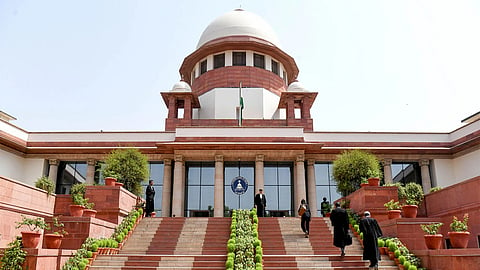

NEW DELHI: In a landmark ruling aimed at ensuring speedy disposal of cases under the Unlawful Activities (Prevention) Act (UAPA) and similar laws, the Supreme Court on Thursday asked chief justices of all high courts to review the status of pending trials in their states and implement measures to prevent delays.
A two-judge bench headed by Justice Sanjay Karol and Justice N Kotiswar Singh pronounced the verdict, following an appeal by the CBI against bail granted to accused in the 2010 derailment of the Jnaneswari Express in West Bengal’s West Midnapore district.
"Ultimately, a democracy is judged not by how it treats the unquestionably innocent, but by how it safeguards the rights of those it suspects. In that moral balance, the justice system must ensure that even under a reverse burden regime, the accused is not abandoned to the weight of presumptive guilt but supported in the pursuit of truth and justice," the court said.
The apex court directed high courts to examine the number of cases pending under laws imposing a reverse burden of proof and to assess whether sufficient special courts have been designated to try such offences. Where special courts are not in place, high courts must evaluate whether existing Sessions courts handling these cases are adequate and, if not, take the matter up with appropriate authorities.
High courts are also instructed to scrutinise the posting of judicial officers and staffing in these courts to remove administrative hurdles that may cause delays. Periodic reports from trial courts are to be obtained, and issues affecting their smooth functioning must be addressed. "The Trial Court shall take stock of the matter and record in its order, the status thereof and the reasons for the trial having remained pending for many years, prior to the matter having been taken up after this judgment," the court said.
The bench further mandated that trials under such laws be conducted on a day-to-day basis, with adjournments allowed only in exceptional circumstances. Administrative judges of high courts, as nominated by the chief justices, are to seek reports every four weeks from trial judges to ensure compliance.
"Constitutional democracy does not legitimise burdens by simply declaring them; it must ensure that those burdened are meaningfully equipped to bear them, even those who are accused of the worst offences imaginable. If the State, in spite of all its might presumes guilt, then the same State must also, with the employment of all the resources at its command, create pathways through which the accused can reclaim their innocence," the 32-page verdict stated.
The court noted that procedural delays in UAPA cases exacerbate the hardships of the accused. "Courts, bound by legislative intent and statutory language, ask for, even before the trial begins, the accused to be able to establish preliminarily, that they will be able to rebut the presumption against them. This doctrinal inversion becomes all the more pernicious on account of procedural delays and very liberty of a person becomes hostage to clogged dockets, overworked judges, a lax prosecution, repeated adjournments by members of the bar and much more," it said.
The Supreme Court emphasised that the institutions of justice must act as active guarantors of fairness, ensuring real access to counsel and preventing presumptions of guilt from hardening into irreversible verdicts before trials conclude.
