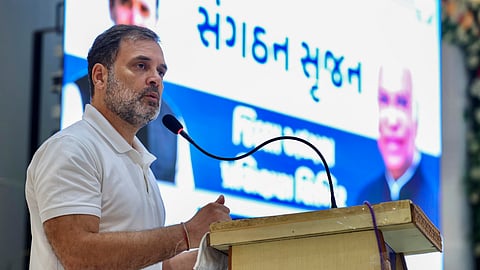

AHMEDABAD: With Gujarat in its crosshairs for 2027, Congress has launched an aggressive organisational reset led by Rahul Gandhi.
At a high-stakes training camp in Anand, he took sharp digs at the Election Commission, vowed to dethrone BJP in its home turf, and energised grassroots leaders under the ‘Sangathan Sujan Abhiyan’.
The visit also included emotional outreach from cooperative sector meetings to connecting with grieving families of the Gambhira Bridge collapse victims in Vadodara.
With Mission 2027 in full swing, the Congress has kicked off a decisive campaign in Gujarat, the BJP's strongest bastion. A three-day training camp for newly appointed District Congress Committee (DCC) presidents is underway at a resort near Anand, aimed at crafting a clear roadmap for the upcoming state assembly elections.
The event, concluding July 28, forms the backbone of Congress's "Sangathan Sujan Abhiyan" a national campaign to revitalise its organisational machinery.
At the centre of this push stood Leader of Opposition Rahul Gandhi, who delivered a hard-hitting address that combined political strategy with sharp critique.
Accusing the Election Commission of playing umpire for the ruling party, Gandhi reportedly used a cricket analogy to boost morale: “If you get out repeatedly, you may begin to doubt yourself. But sometimes, it’s the umpire who is biased.”
This, said Surendranagar DCC chief Naushad Solanki, helped ground-level leaders understand that defeats like the 2017 Gujarat polls were not merely internal failures but also influenced by "dubious voters’ lists".
Gandhi, according to Solanki, made it clear that Gujarat is no longer just a BJP stronghold, it is the battleground. "If we defeat them here, they can be defeated anywhere," Gandhi told the gathering, signalling a shift in Congress's conventional strategy, which once prioritised states like Uttar Pradesh and Bihar.
He went further, slamming the BJP-RSS combine with a stinging metaphor likening the nation to a temple where everyone has the right to pray, but the ruling regime dictates the distribution of ‘prasad’ based on caste and privilege.
“What a Dalit, OBC, or tribal receives is different from what an Ambani or Adani gets,” Gandhi was quoted as saying.
Beyond rhetoric, the visit included strategic grassroots engagement. Gandhi held discussions with leaders from cooperative milk unions and dairy farmers, an influential community in Gujarat’s economic and political fabric.
In an emotionally charged moment outside the Vadodara airport, a local Congress worker, Mitesh Parmar, ran in front of Gandhi’s convoy shouting, “Rahul Gandhi tum aage badho, hum tumhare saath hain!” Moved by the gesture, Gandhi called him over, shook his hand, and took his card instantly, reigniting the loyalist's faith.
Parmar, who claims to be burdened by dozens of cases for his activism, told reporters: "Ready to sacrifice my life to bring Congress to power in Gujarat; I’ve been fighting for 35 years, but senior leaders are blocking my path."
Later, Gandhi met with families of those killed in the Gambhira Bridge collapse in Vadodara district, continuing his emotionally resonant outreach amid political mobilisation. With old warhorses leading the charge and grassroots voices being heard, Congress’s Gujarat strategy is clearly shifting gears from defence to direct attack.